Bloating, hard stools, belching and upper-abdominal discomfort do not all point to the same digestive problem. By separating these symptoms, tracking likely triggers and understanding how an Ayurvedic consultation fits alongside medical assessment, you can choose safer next steps and avoid unsuitable cleanses or laxatives.
Key takeaways
- Bloating, gas, constipation and indigestion describe different digestive symptoms.
- Track meals, eating speed, hydration, movement and stress to identify triggers.
- Choose warm, simple meals and increase fibre gradually with adequate fluids.
- Use Triphala, laxative herbs and Panchakarma only with qualified guidance.
Bloating, Gas, Constipation and Indigestion Are Not the Same Problem
Bloating is a feeling of pressure, fullness or swelling; abdominal distension is a visible increase in waist size. The two can occur together, but not always. Gas and belching describe air moving through the digestive tract, while constipation concerns bowel frequency, stool hardness or difficult passage.
| Symptom | What it usually means | What to watch for |
|---|---|---|
| Bloating | Fullness, pressure or a tight abdomen | Persistent symptoms, food-triggered episodes or visible distension |
| Gas and belching | Flatus, burping or trapped-air discomfort | Severe pain, vomiting or inability to pass gas |
| Constipation symptoms | Hard stools, straining, fewer bowel movements or incomplete emptying | New onset, worsening symptoms or blood in stool |
| Indigestion and dyspepsia | Upper-abdominal burning or discomfort, early fullness, nausea or post-meal fullness | Recurrent symptoms, weight loss, anaemia or trouble swallowing |
| Heartburn or reflux | Burning behind the breastbone or sour fluid rising into the throat | Chest pressure, breathlessness, swallowing difficulty or persistent symptoms |
Constipation is not the same as indigestion, and “acidity” can refer loosely to heartburn, reflux or upper-abdominal burning. Recurrent dyspepsia can reflect functional discomfort, but it can also occur with ulcers, Helicobacter pylori, medication injury or reflux.
Arrange medical assessment for rectal bleeding, black stools, continuous or severe abdominal pain, vomiting, fever, unintentional weight loss, anaemia or inability to pass gas. Do not use a self-directed Ayurvedic purge for these symptoms; obstruction and other gastrointestinal diseases need prompt evaluation.
The Everyday Triggers Behind Digestive Discomfort
Digestive discomfort often follows a repeatable pattern: too little fibre or fluid, rushed meals, inactivity, medicines, or stress can alter bowel movement and stomach comfort. Low fibre intake and inadequate fluid intake are common constipation triggers; suddenly adding a large amount of fibre can instead increase gas and bloating, especially without enough water.
| Pattern | What it can worsen | What to notice |
|---|---|---|
| Eating quickly | Bloating and belching | Swallowing air, chewing poorly, or drinking through a straw |
| Large or late meals | Indigestion, reflux and upper-abdominal fullness | Burning or discomfort after lying down |
| Prolonged sitting | Constipation and abdominal pressure | Fewer bowel movements or hard stools |
| Food intolerance | Bloating, gas and loose stools | Symptoms repeatedly follow milk, wheat or another food |
| Medicines | Constipation or indigestion | Opioid painkillers, iron, calcium or aluminium antacids, and some anti-inflammatory drugs |
| Stress and poor sleep | Gas, constipation or dyspepsia | Symptoms flare during anxious periods without a clear food change |
Common causes of bloating also include sudden diet changes, carbonated drinks and eating portions larger than your usual tolerance. Stress can change gut movement and make normal stretching feel painful, so the same meal may feel different on different days.
Do not assume every symptom is a lifestyle problem. Persistent discomfort after changing these patterns needs a medication review and medical assessment for food intolerance, celiac disease, inflammation or another cause.
How Ayurveda Interprets Digestion Without Replacing Diagnosis
Agni, ama and vata are Ayurvedic interpretive tools, not biomedical diagnoses. Agni describes digestive capacity through appetite, meal tolerance and bowel patterns; discussion of agni and digestion does not measure stomach acid or identify disease.
Ama Ayurveda uses ama for a traditional idea of incompletely processed material associated with heaviness, coating or sluggishness. Vata relates to movement and dryness; vata constipation commonly refers to hard stools, straining, gas or irregular bowel habits. These concepts cannot distinguish functional constipation from celiac disease, inflammatory bowel disease or obstruction.
A responsible Ayurvedic digestive consultation should collect:
- When symptoms began, how often they occur and whether they are worsening
- Stool frequency, consistency, straining, urgency, blood or black colour
- Appetite, meal timing, portion size, food changes, fluid intake, sleep and stress
- Every medicine, supplement and herbal product, including laxatives and antacids
- Previous diagnoses, operations, pregnancy status and relevant test reports
- Alarm symptoms such as persistent vomiting, fever, severe pain, inability to pass gas, weight loss, anaemia, rectal bleeding or progressive difficulty swallowing
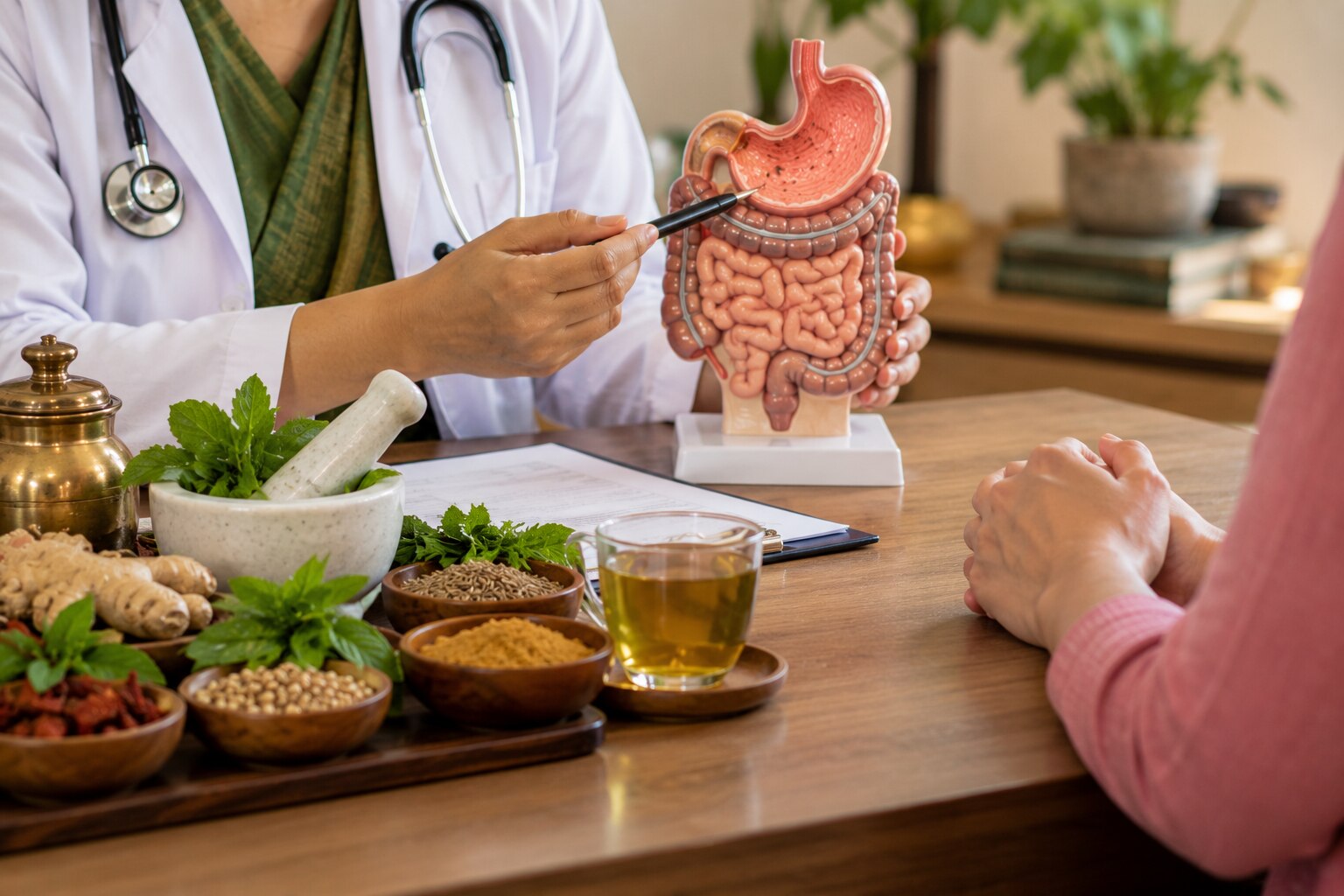
Tongue and pulse examination can add traditional context, but should not replace this history, a physical examination or medical testing. If you consult Marma Ayurved And Panchkarma Clinic, bring your medicine list and recent reports so any Ayurvedic plan is considered alongside conventional care.
Food and Daily Habits That Support Easier Digestion
Smaller meals eaten slowly are easier to test than one large late meal. An Ayurvedic diet for bloating may emphasise warm cooked food, mild seasoning and regular meal times; stop or adjust any food that repeatedly causes pain, diarrhoea or marked distension. Warm fluids can feel soothing, but they do not remove a blockage.
Try these changes for two weeks and note stool form, discomfort and meal timing:
- For fibre and constipation, increase fibre gradually with oats, vegetables, fruit, beans or psyllium. A sudden increase can worsen gas, especially if you do not drink enough.
- Drink fluids regularly unless a clinician has restricted them because of heart, kidney or liver disease. Add fibre and fluids together rather than relying on either alone.
- Take a 10- to 15-minute walking after meals when comfortable. Regular daily activity also supports bowel movement.
- Sit on the toilet at the same time each day, preferably after breakfast, and respond to the urge instead of postponing it.
- Rest your feet on a low stool so your knees sit above your hips. Avoid forceful straining and do not spend long periods scrolling on the toilet.
Abdominal massage with warm oil can be a comfort measure, not a treatment for obstruction. Persistent bloating despite these habits deserves medical assessment rather than repeated cleansing.
Be Careful With Laxative Herbs, Triphala and Panchakarma
A product marketed as “natural” is not a safety certificate. Triphala for constipation has limited clinical evidence, and products vary in dose, constituent concentration and contamination risk. Ayurvedic laxative safety depends on the specific formulation, your health and the duration of use; excessive purgation can cause diarrhoea, dehydration and electrolyte abnormalities.
Get conventional medical evaluation before any cleanse if you have:
- Black stools or vomiting blood
- Progressive difficulty swallowing
- Persistent vomiting, jaundice or unexplained weight loss
- Anaemia or severe, ongoing abdominal pain
Before taking Triphala or another laxative herb, show the exact container, ingredient list and dose to a qualified practitioner. Ask for a medicine review: herbal medicine interactions can affect anticoagulants, diabetes medicines, blood-pressure medicines and drugs with a narrow therapeutic range. Do not use a purgative to force relief from unexplained or persistent symptoms.
Panchakarma for digestion is not one standard treatment. The term covers changing procedures and sequences, so ask what will be used, why it fits your symptoms, who will monitor you and what happens if you become unwell. Claims that it universally detoxes the bowel are not established clinical conclusions.
Massage, warm fluids and tailored meal timing may provide comfort, but they do not remove proven toxins or correct an intestinal blockage. Stop self-treatment and seek assessment if bloating persists.
Frequently asked questions
Are bloating, gas, constipation and indigestion the same problem?
No. Bloating describes pressure or fullness, distension describes visible abdominal enlargement, gas involves air movement, and constipation involves hard or difficult-to-pass stools or infrequent bowel movements.
What everyday habits can trigger digestive discomfort?
Eating quickly, large or irregular meals, low fluid intake, sudden increases in fibre, inactivity and stress can contribute to digestive symptoms. Track these factors alongside your meals and symptoms.
How does Ayurveda interpret digestive symptoms?
Ayurveda considers digestion, appetite, bowel patterns, food choices, daily routine and other personal factors together. This framework does not replace medical diagnosis when symptoms are severe, persistent or unexplained.
Is Triphala or Panchakarma suitable for constipation?
Not automatically. Triphala and other laxative herbs can cause cramps, diarrhoea or interactions, while Panchakarma requires individual assessment. Seek qualified Ayurvedic guidance, especially during pregnancy or with ongoing illness or medication use.