Thyroid symptoms can reflect very different conditions, from hypothyroidism and Hashimoto’s disease to hyperthyroidism, thyroiditis or a thyroid nodule. You will learn how to use Ayurvedic care, prescribed treatment, diet and monitoring together without replacing necessary testing or changing medication unsafely.
Key takeaways
- Get TSH and free T4 tests before starting Ayurvedic thyroid treatment.
- Never stop levothyroxine or antithyroid medicine without your prescribing doctor.
- Avoid iodine supplements unless a clinician confirms deficiency.
- Seek urgent care for severe breathing difficulty, chest pain or confusion.
Why thyroid symptoms need a medical diagnosis before Ayurvedic treatment
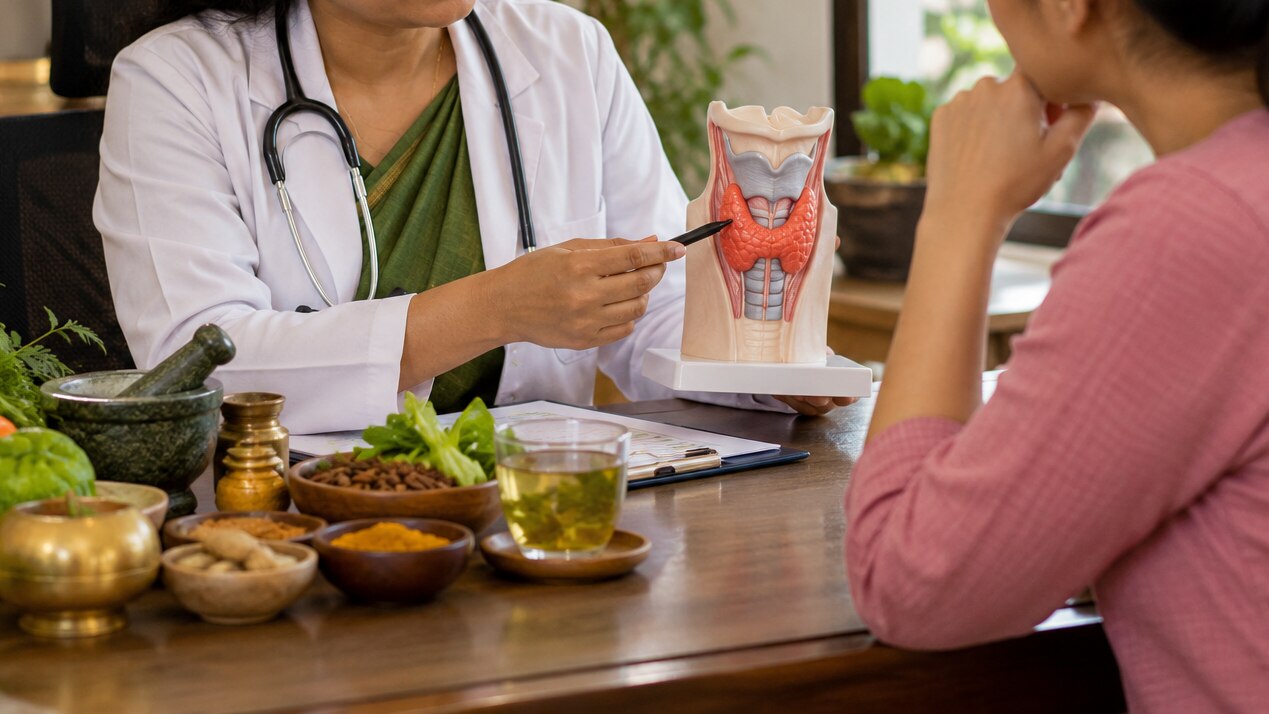
Ayurvedic assessment can examine digestion, sleep, energy, weight change, bowel habits, pulse, and symptom patterns through an Ayurvedic framework. It cannot determine whether those symptoms come from low thyroid hormone, excess hormone, inflammation, a nodule, or cancer. Obtain a thyroid-stimulating hormone result, also called TSH, and a free T4 test before starting treatment.
| Condition | Common laboratory or examination clues | Test that distinguishes it |
|---|---|---|
| Hypothyroidism | High TSH with low free T4 in primary disease | TSH and free T4; thyroid peroxidase antibodies can support Hashimoto’s disease |
| Hyperthyroidism | Low TSH with high free T4 or free T3 | TSH, free T4, free T3, and Graves’ antibodies when indicated |
| Thyroiditis | Thyroid levels can shift from high to low as inflammation changes | Repeat thyroid tests, clinical review, and inflammatory assessment |
| Goitre or thyroid nodule | Neck enlargement or a distinct lump, with normal or abnormal hormone levels | Thyroid ultrasound; fine-needle biopsy for suspicious nodules |
| Possible thyroid cancer | A nodule with concerning ultrasound features, regardless of TSH | Ultrasound followed by fine-needle biopsy when recommended |
These results prevent a symptom-based mismatch: levothyroxine treats established primary hypothyroidism, while hyperthyroidism, thyroiditis, and nodules need different care. Tell the clinician about biotin supplements because they can distort thyroid blood tests.
Review any “natural” thyroid product before use; it may contain iodine or thyroid hormone, and replacing prescribed treatment can cause dangerous under-treatment or excess hormone.
How to combine Ayurvedic care with thyroid medicines and procedures
Keep prescribed thyroid treatment as the anchor. Ayurvedic treatment for thyroid may support routines, stress management or general wellbeing, but it has not been shown to replace levothyroxine, antithyroid medicines, beta blockers, radioactive iodine or thyroid surgery.
1. Take levothyroxine exactly as prescribed and do not reduce or stop it because symptoms improve. Tell your clinician about high-fibre diet changes, coffee, supplements and other medicines; these can alter absorption, so thyroid tests may need repeating after a significant change.
2. For hyperthyroidism, continue antithyroid medicines and beta blockers according to the treatment plan. Ayurvedic medicines or Panchakarma must not delay monitoring, dose changes or urgent care for a rapid heartbeat, fainting or worsening symptoms.
3. Before radioactive iodine, ask the nuclear-medicine or endocrinology team which supplements and Ayurvedic products to stop, and when. After treatment, attend scheduled thyroid tests; many people need levothyroxine when thyroid function falls.
4. Before thyroid surgery, give the surgeon and anaesthetist a complete product list, including powders, tablets and oils. Stop nothing unless the treating team instructs you, because some products affect bleeding, anaesthesia or thyroid levels.
5. Treat “natural thyroid” products as medicines, not harmless substitutes. They can contain thyroid hormone or iodine with unpredictable amounts. If you are pregnant, trying to conceive or recently postpartum, obtain obstetric and thyroid-clinician advice before using iodine-containing products or Panchakarma. Review every ingredient with a clinician or pharmacist.
Diet, iodine and supplement choices that affect thyroid care
There is no universal thyroid diet. Eat regular meals built around protein, vegetables, fruit, whole grains and fibre, but take levothyroxine with water on an empty stomach, 30–60 minutes before breakfast. Keep coffee, high-fibre meals, calcium, iron and antacids away from the dose; separate calcium and iron supplements by at least four hours.
- Do not start kelp, seaweed powder or iodine supplements without clinical advice. Iodine is essential, but excessive or variable amounts can trigger thyroid dysfunction in susceptible people.
- Treat selenium as a nutrient, not a routine thyroid cure. Keep total intake below 400 micrograms daily; excess can cause garlic-like breath, hair or nail changes, stomach symptoms and neurological problems.
- Do not adopt a gluten-free diet solely for hypothyroidism. Request coeliac testing when symptoms or history suggest it, because untreated coeliac disease can impair nutrient and levothyroxine absorption.
- Review every “natural thyroid” product with your clinician or pharmacist. It may contain thyroid hormone or iodine in an unpredictable amount and can cause under-treatment or excessive hormone.
- Tell your prescriber before making a major change to fibre, coffee, supplements or meal timing. Recheck thyroid blood tests after a clinically significant change rather than adjusting the dose yourself.
Pregnancy, plans to conceive and the first months after birth require prompt thyroid and iodine advice. Do not begin an iodine-containing or Ayurvedic thyroid product during these periods without guidance from your obstetric and thyroid clinicians. Consistency matters more than chasing a perfect food list.
When symptoms need urgent evaluation instead of a wellness plan
Seek urgent medical assessment rather than starting a wellness plan if thyroid symptoms are severe, sudden or worsening. Untreated hyperthyroidism can strain the heart, weaken bones and trigger atrial fibrillation or heart failure.
| Warning sign | Why it matters | What to do |
|---|---|---|
| Chest pain, fainting or severe breathlessness | Possible cardiac or circulatory emergency | Seek emergency care immediately |
| A very rapid or irregular heartbeat | Hyperthyroidism can provoke dangerous rhythm problems | Get urgent medical assessment |
| New hyperthyroidism symptoms, such as tremor, sweating, heat intolerance and unexplained weight loss | Treatment may be needed to prevent worsening disease | Arrange prompt thyroid testing |
| Marked neck swelling or difficulty swallowing | An enlarged thyroid or nodule can threaten swallowing or breathing | Seek prompt clinical evaluation |
| Confusion, high fever and a racing pulse | This pattern can indicate thyroid storm, a life-threatening complication | Call emergency services |
Panchakarma is not a harmless “detox” for everyone. Induced vomiting, purgation, enemas, fasting, sweating and fluid restriction can cause dehydration, electrolyte disturbances, aspiration, infection and medication-related complications. Those effects become more dangerous during a rapid heartbeat or untreated hyperthyroidism.
Do not begin these procedures during acute symptoms, or use them instead of prescribed thyroid treatment. Obtain medical clearance first if you are pregnant, an older adult, or have heart, kidney or endocrine disease. Complementary care may support wellbeing, but it has not been shown to replace treatment for hypothyroidism, hyperthyroidism, nodules or thyroid cancer.
How to choose and prepare for a safe thyroid-care consultation
Choose care by the decision you need made, not by the word “natural.” Compare each option on its role, evidence and safety limits.
| Option | What it does | When it applies |
|---|---|---|
| Endocrinology-led care | Confirms the diagnosis, adjusts levothyroxine or antithyroid medicine, and evaluates thyroid antibodies, nodules or cancer risk | Abnormal TSH or free T4, suspected Graves’ disease, Hashimoto’s disease, thyroiditis, goitre or nodules |
| Nutrition counselling | Finds deficiencies, medication-food interactions and unnecessary restrictions | Coeliac disease, difficult medication absorption or a diet needing correction; gluten-free eating is not a universal hypothyroidism treatment |
| Ayurvedic care | Offers symptom assessment, routine and supportive practices | Alongside medical treatment, never as a replacement for prescribed thyroid medicine |
| Watchful monitoring | Repeats planned tests without immediate treatment | Only when a clinician documents that mild or stable findings are safe to observe |
Bring your recent TSH and free T4 reports, thyroid antibodies, thyroid ultrasound or biopsy results, prescriptions, supplement labels, dose times and a symptom timeline. Include heart rate readings, menstrual changes, weight changes and previous thyroid procedures.
Pregnancy and thyroid disease require prompt testing and dose review. Tell every practitioner if you are pregnant, trying to conceive or recently postpartum, and do not start iodine-containing or Ayurvedic thyroid products first.
At Marma Ayurved And Panchkarma Clinic, ask how any proposed therapy will be coordinated with your endocrinologist and pharmacist, especially before fasting, purgation, enemas or sweating procedures. Never stop or alter thyroid medicine independently.
Frequently asked questions
Why are TSH and free T4 tests needed before Ayurvedic thyroid treatment?
Symptoms such as fatigue, weight change and bowel changes cannot identify the cause. TSH and free T4 help assess whether thyroid hormone is low, high or within range; further tests may be needed.
Can Ayurvedic care be combined with thyroid medicines?
Discuss every Ayurvedic medicine and procedure with your endocrinologist and Ayurvedic clinician. Do not stop levothyroxine, antithyroid medicine or prescribed follow-up testing without medical guidance.
Should you take iodine supplements for thyroid health?
Do not add iodine supplements routinely. Excess iodine can worsen some thyroid conditions, so check your diet, medicines and test results with a clinician first.
When do thyroid symptoms require urgent evaluation?
Seek urgent care for severe breathing difficulty, chest pain, fainting, confusion, a rapidly enlarging neck swelling or severe palpitations.
How should you prepare for a thyroid-care consultation?
Bring recent TSH and free T4 results, your diagnosis, medicine and supplement list, symptom timeline, medical history and questions about proposed Ayurvedic treatments.