Blocked breathing, facial pressure, postnasal drip, reduced smell, and recurring headaches can come from sinus inflammation, allergies, infection, or a structural problem. You will learn how to identify the pattern, use natural care safely, recognise danger signs, and decide where Ayurvedic treatment belongs beside standard medical evaluation.
Key takeaways
- Most acute sinusitis follows a cold and improves within 7–10 days.
- Seek medical attention for severe pain, eye swelling, vision changes, or persistent symptoms.
- Use fluids, saline rinses, rest, and humidified air for safer symptom relief.
- Choose Ayurvedic care alongside medical evaluation, especially for recurrent or prolonged symptoms.
Is It Sinusitis or Something That Looks Like It?
Sinusitis is more likely when blocked nose, facial pressure, reduced smell, headache, and postnasal drip occur together, especially after a cold. Most acute cases are viral and improve within 7–10 days.
Bacterial sinusitis becomes more likely when symptoms last at least 10 days without improvement, remain severe for 3–4 days with fever of 39 °C (102 °F) or higher and thick discharge or facial pain, or worsen after initial improvement.
| Condition | Clues that favour it | What points away from sinusitis |
|---|---|---|
| Allergic rhinitis | Itching, repeated sneezing, watery eyes, clear discharge, symptoms linked to dust, pollen, or animals | No fever; symptoms recur with exposure rather than following an infection |
| Common cold | Sore throat, cough, tiredness, runny nose, gradual improvement within 7–10 days | Little focal facial pressure or smell loss after the cold settles |
| Migraine | Throbbing pain, nausea, light or sound sensitivity, worsening with activity | Nasal congestion can occur during migraine, so facial pressure alone does not prove sinusitis |
| Dental pain | One-sided upper-tooth pain, pain when chewing, temperature sensitivity, or recent dental treatment | Dental infection can cause maxillary sinusitis, especially with foul one-sided drainage |
| Deviated septum | Long-standing, mainly one-sided obstruction and mouth breathing | It does not explain a new fever, thick discharge, or sudden worsening |
Symptoms lasting 12 weeks or longer need assessment for chronic rhinosinusitis; congestion and pressure alone cannot establish that diagnosis. Nasal endoscopy or a CT scan must show inflammation. Recurrent episodes also warrant evaluation for allergy, polyps, dental disease, or structural blockage.
When Sinus Symptoms Need Medical Attention
Home care is reasonable when symptoms are mild, you can drink fluids, and you are improving within the first 7–10 days. Most acute cases are viral, so antibiotics or specialist care are not automatically needed.
Seek urgent medical assessment for these sinusitis warning signs:
- Eye swelling, redness around the eye, or vision changes
- A severe headache, especially one that is sudden, unusual, or focused in the forehead
- Neck stiffness, confusion, weakness, numbness, or another focal neurologic symptom
- Rapidly progressive facial swelling
- A temperature of 39 °C (102 °F) or higher with severe illness
Do not treat these symptoms with steam, nasal remedies, or Ayurvedic care at home. They can signal infection spreading around the eye or into the skull.
Arrange a primary-care appointment when symptoms last at least 10 days without improvement, remain severe for 3–4 days with fever of 39 °C or higher plus pus-like nasal discharge or facial pain, or worsen after initial improvement. This “double worsening” pattern raises concern for bacterial sinusitis.
Ask for an ENT evaluation when congestion, drainage, or facial pressure persists for 12 weeks, keeps returning, affects one side, or fails to respond to treatment. Chronic rhinosinusitis requires objective inflammation on nasal endoscopy or CT; symptoms alone do not establish the diagnosis.
An ENT can also check for polyps, a deviated septum, an obstructive lesion, or dental disease.
Safe Natural Care for Pressure and Congestion
Warm compresses over the cheeks and forehead, adequate fluids, rest, and a clean cool-mist humidifier can ease dryness and pressure. Avoid smoke and strong fragrances. Steam inhalation may feel soothing for a short time, but it does not reliably treat sinus inflammation; never lean over a bowl of hot water because scalds are preventable.
| Measure | What it helps | Important limit |
|---|---|---|
| Saline nasal irrigation | Flushes mucus, allergens, and irritants | Adjunct only; it cannot remove a polyp, correct a deviated septum, or treat a dental source |
| Warm compress | Temporarily eases facial pressure | Does not clear an obstruction or cure infection |
| Cool-mist humidifier | Adds moisture to dry air | Clean and dry the tank daily to prevent microbial growth |
| Intranasal corticosteroid spray | Reduces inflammation in chronic rhinosinusitis | Use the product correctly and discuss persistent symptoms with a clinician |
Perform saline nasal irrigation safely:
- Use distilled water, sterile water, or boiled and cooled water. Untreated tap water can rarely carry amoebae that cause life-threatening infection.
- Mix a commercial saline packet according to its label. Do not rinse with plain water or make the solution unusually concentrated; both can cause burning.
- Wash your hands, lean over a sink, breathe through your mouth, and let the solution flow gently through one nostril and out the other. Do not force it.
- Wash the neti pot or squeeze bottle after each use, then air-dry it completely.
- Stop if you develop persistent pain, nosebleeds, worsening burning, or ear pressure. Irrigation supports symptom control, not a cure for every cause of congestion.
How Ayurveda May Fit Into a Sinusitis Care Plan
A qualified practitioner should make Ayurvedic treatment for sinusitis an individualized plan, not a replacement for checking the cause. Assessment should cover:
- Symptom duration, recurrence, triggers, smell loss, discharge, and response to previous treatment
- Nasal examination, allergy history, medicines, pregnancy, asthma, and relevant medical conditions
- Swallowing difficulty or aspiration risk before placing any oil or preparation in the nose
- The need for a primary-care or ENT assessment when symptoms are persistent, severe, one-sided, or structurally related
Guideline-supported care for chronic rhinosinusitis includes saline irrigation and intranasal corticosteroid sprays. Ayurveda can be discussed alongside these treatments; describing steroid sprays as inherently harmful creates a misleading choice. A practitioner may also consider diet, sleep, trigger avoidance, Ayurvedic herbal formulations, or supervised local therapies after reviewing your medicines and health history.
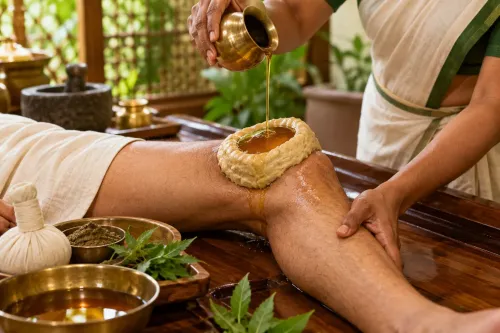
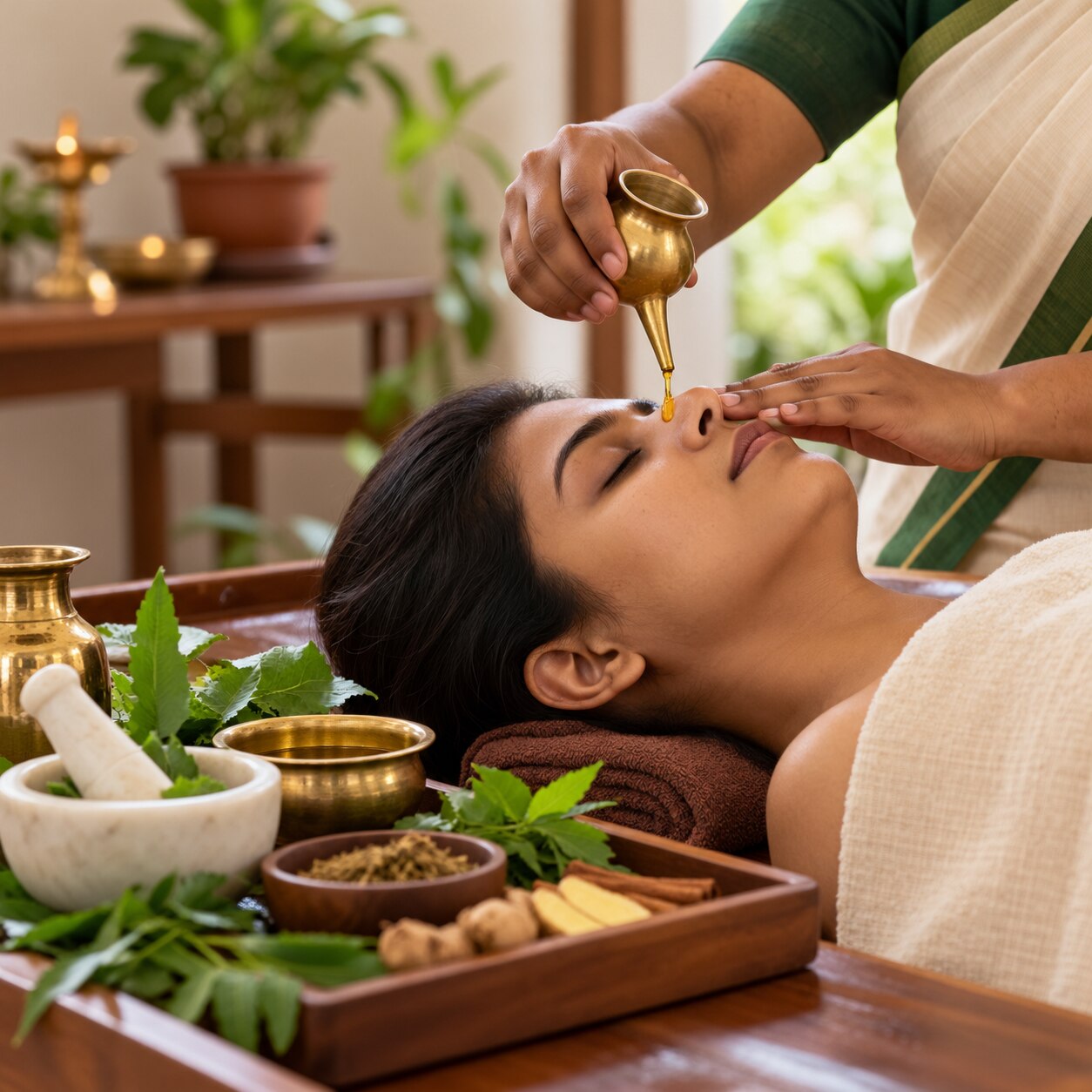
Nasya means putting medicated oil or another preparation into the nose. It is not interchangeable with saline irrigation or a corticosteroid spray. Oil entering the lungs can cause exogenous lipoid pneumonia, so avoid self-treatment and use particular caution if you have swallowing or aspiration problems.
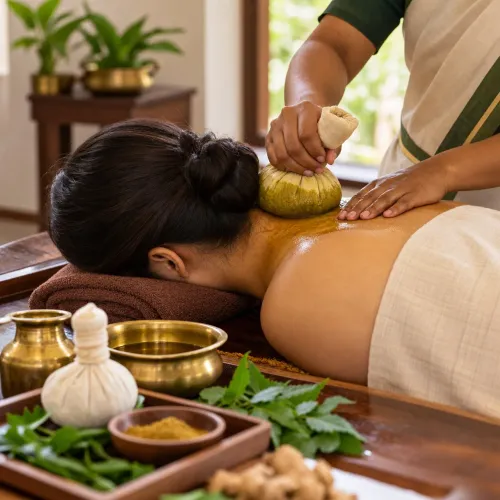
Panchakarma for sinusitis is not one standardized procedure. Its procedures, doses, duration, and screening differ between practitioners, and strong evidence that it eradicates chronic rhinosinusitis is lacking. Ask for the exact procedure, ingredients, contraindications, and monitoring plan.
Marma Ayurved And Panchkarma Clinic can be approached responsibly by asking how its proposed plan will coordinate with ENT care and what would trigger referral. Seek urgent conventional assessment for eye swelling, vision change, confusion, stiff neck, focal weakness, rapidly spreading facial swelling, or high fever with severe illness.
Choosing Care and Knowing Whether You Are Improving
A useful plan has a time limit: uncomplicated acute symptoms should start easing within 7 to 10 days, while chronic rhinosinusitis requires at least 12 weeks of symptoms plus inflammation seen on nasal endoscopy or CT.
| Approach | Expected timeline | Daily effort | Change course when |
|---|---|---|---|
| Saline irrigation | Relief may begin within days; benefit builds over weeks | One or two rinses daily with sterile, distilled, or previously boiled water | No improvement after several weeks, or rinsing causes pain or bleeding |
| Intranasal corticosteroid spray | Often needs several days; judge it after 2 to 4 weeks of correct use | One or two sprays per nostril daily, directed away from the septum | Symptoms persist despite consistent use, or side effects continue |
| Ayurvedic care | Timing varies by formulation and procedure; evidence does not show Panchakarma eradicates chronic disease | Effort ranges from a brief home routine to repeated clinic visits | Do not delay testing; avoid nasal oil with swallowing or aspiration risk |
| Antibiotics for sinusitis | Not routinely useful for uncomplicated cases | Take only when a clinician identifies a bacterial pattern and prescribes the course | Seek review for symptoms lasting 10 days without improvement or worsening after initial improvement |
Recurrent sinusitis deserves assessment for allergy, polyps, dental disease, structural blockage, or immune problems rather than repeated self-treatment. Arrange primary-care or ENT review when episodes keep returning, symptoms last beyond 12 weeks, or treatment fails; endoscopy or CT can reveal an obstruction that saline cannot remove.
Use urgent care for eye swelling, vision change, confusion, stiff neck, severe headache, or high fever.
Frequently asked questions
How can you tell sinusitis from symptoms that look like it?
Sinusitis is more likely when blocked nose, facial pressure, reduced smell, headache, and postnasal drip occur together, particularly after a cold. Allergies, migraine, dental problems, and nasal polyps can cause similar symptoms.
When do sinus symptoms need medical attention?
Get medical care for severe or worsening facial pain, eye swelling, vision changes, high fever, confusion, a stiff neck, or symptoms that persist beyond the expected recovery period. Seek urgent care for sudden swelling around the eye or changes in vision.
What natural measures can ease sinus pressure and congestion?
Drink fluids, rest, use a clean saline nasal rinse, and add moisture to dry air. Use sterile, distilled, or previously boiled and cooled water for nasal rinsing, and avoid inserting unsterilized water into the nose.
How might Ayurveda fit into a sinusitis care plan?
An Ayurvedic practitioner can review symptom patterns, triggers, digestion, sleep, and recurrence before suggesting supportive care. Use Ayurveda as part of a coordinated plan rather than delaying evaluation for severe, persistent, or recurrent symptoms.
How do you know whether sinusitis care is working?
Track congestion, facial pressure, smell, discharge, fever, sleep, and pain each day. Improvement means symptoms become less intense and daily function returns; worsening, new warning signs, or failure to improve calls for medical review.