An Ayurvedic obesity plan works best when its food advice produces a sustainable energy deficit without ignoring diabetes risk, thyroid disease, medicines, sleep, or eating patterns. By the end, you will know how to assess the plan, adapt it to Indian meals, compare it with other treatments, and identify unsafe promises.
Key takeaways
- Check BMI, waist circumference, medical history, and eating patterns before changing your diet.
- Use regular meal times, measured portions, protein-rich foods, and minimally processed Indian ingredients.
- Avoid crash diets, unverified detoxes, and stopping prescribed obesity treatment without medical advice.
- Compare practitioner credentials, treatment details, monitoring plans, and safety checks before starting.
What should an Ayurvedic obesity assessment check before diet begins?
Before diet begins, an assessment should combine BMI, waist circumference, medical history, symptoms, and eating patterns rather than rely on appearance, pulse, or tongue examination alone. A BMI of 30 or above defines adult obesity, often recorded as BMI 30 obesity, but BMI does not show body-fat distribution.
Waist circumference adds information about abdominal fat and cardiometabolic risk.
1. Record weight, height, BMI, waist circumference, blood pressure, activity, sleep, and previous weight changes. Set a measurable goal, such as losing 5% to 10% of starting weight over about six months.
2. Review medical history and medicines, including thyroid disease, polycystic ovary syndrome, diabetes, sleep apnea, high blood pressure, liver or kidney disease, Cushing’s syndrome, pregnancy, and eating disorders. Ask about powders, tablets, decoctions, oils, and supplements because herbal products can interact with prescriptions.
3. Ask about appetite, thirst, bloating, constipation, reflux, fatigue, snoring, menstrual changes, emotional eating, late-night meals, sugary drinks, fried snacks, restaurant food, and portion size. This reveals the routine that diet changes must address.
4. Use concepts such as medoroga, agni, ama, and prakriti to individualize food choices and meal routines after medical risks are checked. Translate those findings into specific actions, not labels alone.
Follow-up should track weight, waist circumference, blood pressure, symptoms, medication changes, and clinically indicated glucose, lipids, liver tests, or electrolytes. That makes Ayurvedic treatment for obesity accountable and safer.
How do meal timing, portions, and Indian foods support treatment?
Meal timing for obesity works when it prevents long gaps, grazing, and oversized evening meals while helping you maintain a sustainable calorie deficit. Eat at broadly consistent times, follow hunger and medical needs, and avoid treating “light,” “warm,” or “kapha-reducing” food as fat-burning by itself.
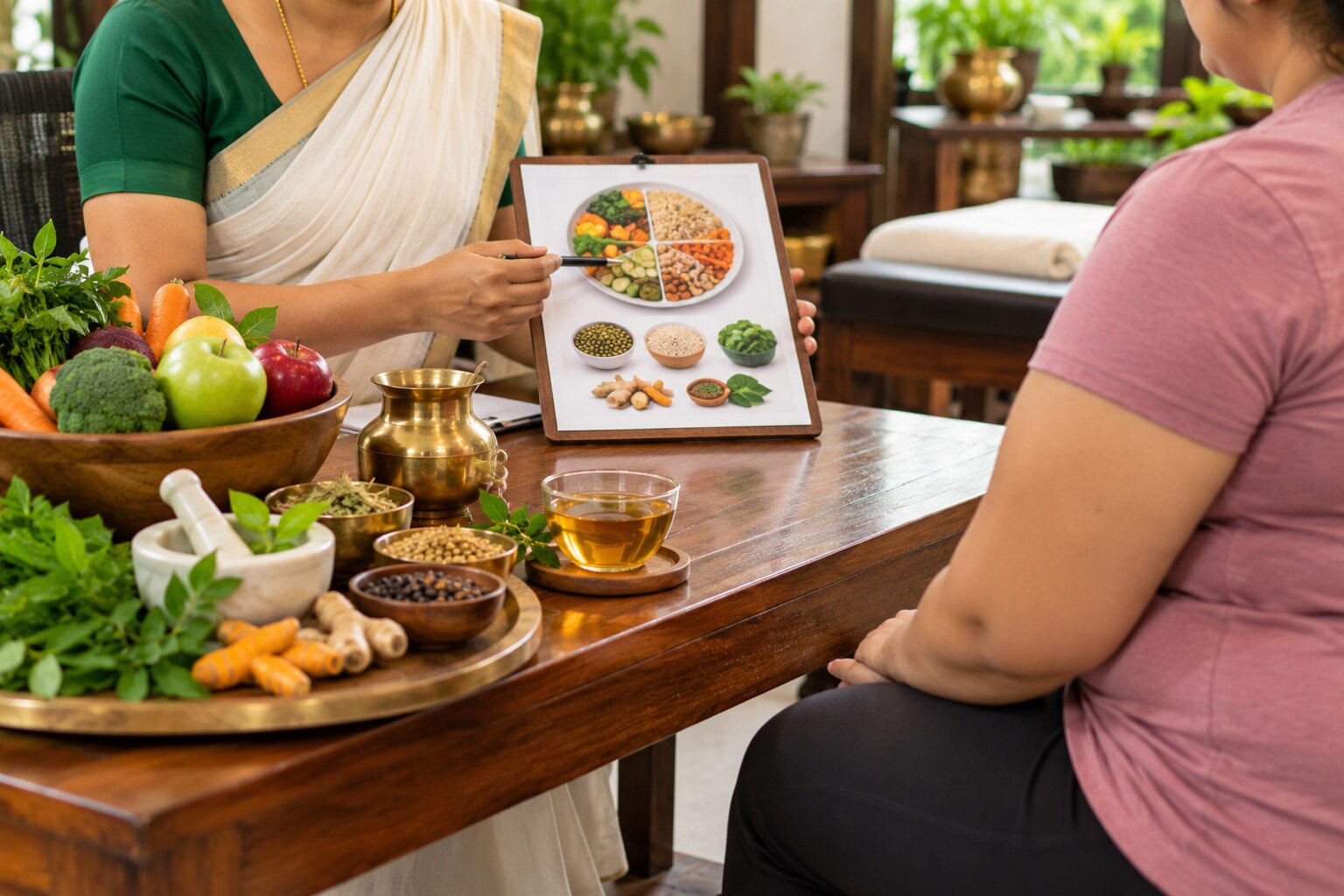
Use this portion structure for lunch and dinner:
- Half the plate: non-starchy vegetables such as लौकी, भेंडी, cabbage, spinach, or mixed vegetables.
- One quarter: protein such as dal, beans, curd, paneer, eggs, fish, or chicken.
- One quarter: starch, keeping rice and roti portions measured rather than unlimited.
Protein and fibre improve fullness and make meals easier to sustain. Choose whole fruit instead of juice, add vegetables to poha or upma, and pair a smaller rice serving with dal and vegetables. One or two rotis with a vegetable and protein dish may suit you better than eating rotis without a defined portion.
Prefer steaming, pressure-cooking, grilling, or lightly sautéing over deep-frying. Measure oil, ghee, nuts, seeds, jaggery, honey, and coconut: wholesome ingredients still add calories, and honey is not calorie-free. Drink water regularly, but do not use excessive fluids, detox drinks, or laxative teas to replace meals.
Sugary beverages and frequent fried snacks can erase the calorie reduction created by an otherwise careful diet. Familiar Indian food works well when portions, cooking fat, snacks, and total daily intake remain visible.
What could a practical seven-day Ayurvedic meal framework look like?
Use this seven-day Ayurvedic meal plan as a repeatable pattern, not a rigid prescription. Eat three meals at consistent times, fill half your plate with vegetables, include protein and fibre, and measure oil or ghee by the teaspoon. “Light” or “kapha-reducing” labels do not cancel calories.
- Day one: Breakfast poha with vegetables; lunch dal, two small rotis and salad; dinner grilled fish or paneer with cooked vegetables.
- Day two: Breakfast vegetable upma with unsweetened curd; lunch rajma and a modest rice portion; dinner chicken or tofu with soup and vegetables.
- Day three: Breakfast eggs or moong chilla; lunch vegetable khichdi with curd; dinner fish or chickpeas with two small rotis.
- Day four: Breakfast idli and sambar; lunch chicken or soy curry with vegetables; dinner dal, sautéed greens and one roti.
- Day five: Breakfast oats with nuts measured by the tablespoon; lunch chana, salad and rice; dinner egg curry or paneer with vegetables.
- Day six: Breakfast poha or upma; lunch home-cooked fish, chicken or lentils with roti; dinner vegetable soup and protein.
- Day seven: Repeat the option that kept hunger controlled, using vegetarian and non-vegetarian options interchangeably.
Choose fruit, roasted chana or plain curd for a snack. Avoid sugary drinks; replace juice, sweet tea and soft drinks with water or unsweetened beverages. At restaurants, choose grilled, steamed or tandoori dishes and skip fried starters.
During Indian festival eating, take one small sweet after a meal, share larger portions, and return to your routine at the next meal.
Which common weight-loss mistakes should you avoid, and what other treatments should you compare?
A plan that removes most food, skips meals, or promises rapid scale loss often removes water and intestinal contents rather than body fat. Foods labelled light, warm, or kapha-reducing still contribute calories; durable loss requires a sustainable energy deficit, adequate nutrition, and repeatable portions.
Avoid these shortcuts:
- Treating detox drinks and obesity as a solution; fluid loss returns when normal intake resumes.
- Using laxatives for weight loss; diarrhoea can cause dehydration and electrolyte disturbances.
- Eliminating all carbohydrates; this can reduce fibre and make rice, roti, or festival eating harder to manage.
- Taking unreviewed fat-burning Ayurvedic herbs; ingredients can interact with diabetes, blood-pressure, kidney, or other medicines.
- Skipping meals after overeating; intense hunger often drives a larger evening intake.
- Calling a lower scale reading fat loss before checking waist measurement and a sustained trend.
Compare the approach against alternatives before committing:
| Option | What it adds | When to compare it |
|---|---|---|
| Dietary Ayurveda | Personalised food structure and meal routines | Use alongside medical care when conditions or medicines raise risk |
| Dietitian care | Calorie, protein, fibre, and deficiency assessment | Choose it for precise nutrition planning or repeated regain |
| Exercise | Preserves fitness and supports energy expenditure | Add resistance and aerobic training suited to your ability |
| Anti-obesity medication | Clinician-supervised appetite or metabolic treatment | Discuss it when lifestyle treatment has not achieved enough loss |
| Bariatric surgery evaluation | Assessment for a durable surgical option | Ask for evaluation when severe obesity or related disease warrants specialist review |
Do not stop prescribed treatment for fasting, Panchakarma, or herbs. With diabetes, heart or kidney disease, pregnancy, or an eating disorder, coordinate every change with your clinician.
How can you judge whether an Ayurvedic obesity plan is safe and credible?
A credible Ayurvedic obesity plan is specific enough for another clinician to audit: it names each ingredient, dose, preparation, timing, duration, and stopping rule. Reject powders or tablets with no full ingredient list, batch details, manufacturer, or quality testing; “natural” does not exclude lead, mercury, arsenic, or drug interactions.
- Ask for a written diet and treatment schedule. It should state portions, fasting limits, hydration instructions, and how Panchakarma and weight loss are expected to connect; vague promises of rapid or permanent loss are warning signs.
- Agree on weight and waist monitoring, blood pressure, symptoms, and medication changes at each follow-up. Record glucose, lipids, liver tests, or electrolytes when your clinician considers them necessary, rather than treating a cleansing sensation as proof of progress.
- Require a medication review before herbs, laxatives, fasting, or dehydration-based procedures. Never stop diabetes, blood-pressure, heart, kidney, or other prescribed treatment without the prescriber’s instruction.
- Set a measurable review point, such as 5% to 10% of starting weight over about six months, while tracking glucose, blood pressure, and function instead of chasing an “ideal” weight.
- Seek medical referral before treatment for pregnancy, an eating disorder, kidney or cardiovascular disease, uncontrolled diabetes, fainting, persistent vomiting, bleeding, or severe weakness.
Evidence for Ayurveda in obesity remains limited, and claims that a particular Panchakarma protocol reliably delivers durable weight loss exceed current research. Marma Ayurved And Panchkarma Clinic can appropriately coordinate individualized Ayurvedic care, monitoring, and referral rather than replace a physician or dietitian.
Frequently asked questions
What should an Ayurvedic obesity assessment check before diet begins?
It should review BMI, waist circumference, medical history, medicines, symptoms, eating patterns, sleep, activity, and relevant laboratory tests. Pulse or tongue examination should not replace standard medical assessment.
How do meal timing, portions, and Indian foods support obesity treatment?
Regular meal timing, measured portions, vegetables, pulses, whole grains, protein-rich foods, and limited sugary drinks support calorie control without eliminating nutritious Indian foods.
What could a practical seven-day Ayurvedic meal framework look like?
A practical framework rotates balanced breakfasts, lunches, dinners, vegetables, pulses, whole grains, and suitable snacks while adjusting portions to your health needs and prescribed treatment.
Which common weight-loss mistakes should you avoid, and what other treatments should you compare?
Avoid crash diets, laxative or herbal detox products, severe restriction, and stopping prescribed medicines. Compare supervised lifestyle treatment, registered dietetic care, obesity medicines, and bariatric surgery when clinically indicated.
How can you judge whether an Ayurvedic obesity plan is safe and credible?
Ask for the practitioner’s qualifications, a written diagnosis and plan, ingredient and dose details, product batch information, interaction checks, follow-up measures, and clear instructions for adverse effects.