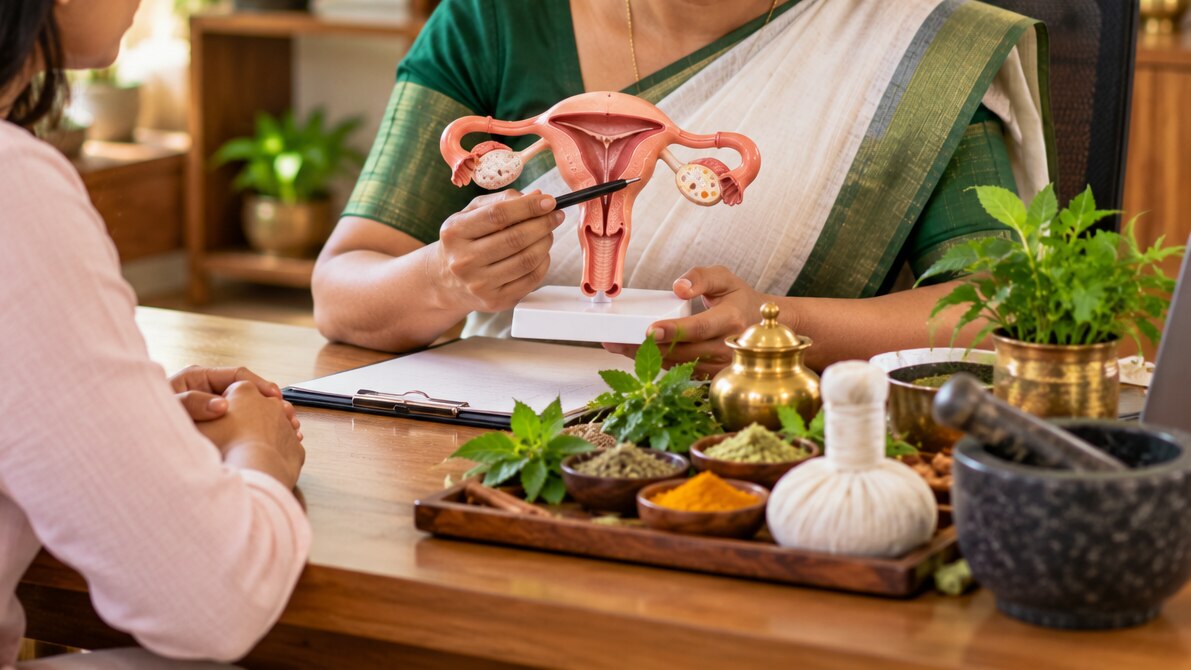
Irregular periods, acne, excess facial hair, weight changes, or difficulty conceiving can point to PCOS, but an ultrasound finding alone cannot establish the diagnosis. You will learn how PCOS is assessed, which treatment goals require conventional medical care, and how to evaluate Ayurvedic support without delaying necessary testing or treatment.
Key takeaways
- PCOS involves ovulation, androgen, or ovarian-pattern changes—not dangerous ovarian cysts.
- Diagnosis requires two of three features after other causes are excluded.
- Choose treatment by goal: cycle regularity, fertility, metabolic health, or symptom relief.
- Track periods, symptoms, medicines, and test results before changing your care plan.
What PCOS Actually Means—and Why It Is Not a Cyst Problem
PCOS is not a diagnosis of dangerous ovarian cysts. Its PCOS meaning is a pattern involving ovulation, androgen excess, and ovarian appearance; in adults, clinicians diagnose it when at least two of these three features are present after excluding other causes.
- Irregular ovulation means eggs are released infrequently or not at all. You may notice long, unpredictable cycles, skipped periods, or difficulty becoming pregnant.
- Androgen excess means raised testosterone or related hormones on blood tests, or signs such as excess facial hair, acne, or scalp hair thinning.
- Polycystic ovarian morphology means an ultrasound shows many small follicles or increased ovarian volume. These follicles are not the same as harmful cysts and do not usually need removal.
You can have PCOS without polycystic ovarian morphology when irregular ovulation and androgen excess are both present. You can also have many small follicles on an ultrasound without having PCOS; that finding alone does not establish the diagnosis.
In adults, elevated anti-Müllerian hormone can serve as an alternative to ultrasound for the ovarian morphology feature when the diagnostic process is appropriate.
The name can therefore mislead you into expecting a cyst-clearing procedure. Treatment focuses on the actual problem—cycle protection, androgen-related symptoms, fertility, or metabolic risk—not on removing normal-appearing small follicles.
How PCOS Is Diagnosed and When Symptoms Need Prompt Care
An ultrasound alone cannot establish a PCOS diagnosis. In adults, clinicians look for two of three findings after excluding other causes: irregular or absent ovulation, clinical or biochemical androgen excess, and polycystic ovarian morphology on ultrasound or elevated AMH.
A menstrual history, pregnancy test when relevant, blood pressure, weight or waist measurement, and examination for acne, excess facial hair, scalp hair thinning, or virilization complete the assessment. Blood tests can include total testosterone and free testosterone, with TSH, prolactin, and 17-hydroxyprogesterone when indicated.
| Cause | Clues that point away from PCOS | Assessment |
|---|---|---|
| Thyroid disease | Fatigue, temperature intolerance, weight change | TSH |
| Hyperprolactinemia | Milk discharge, headaches, visual changes | Prolactin; review medicines |
| Hypothalamic amenorrhea | Low energy availability, intense exercise, low weight, stress | Nutrition, exercise, pregnancy and pituitary assessment |
| Non-classic congenital adrenal hyperplasia | Marked androgen symptoms or early onset | 17-hydroxyprogesterone |
| Cushing syndrome | Easy bruising, purple stretch marks, muscle weakness | Targeted endocrine testing |
| Medication-related changes | Symptoms beginning after steroids, antipsychotics, or hormonal medicines | Medication review |
Seek prompt medical assessment for bleeding that soaks a pad or tampon hourly, severe or one-sided pelvic pain, fainting, sudden deepening of the voice or rapid clitoral enlargement, or a positive pregnancy test with pain or bleeding. These signs can indicate severe blood loss, ovarian complications, an ectopic pregnancy, or a different hormone-producing condition.
Match Treatment to the Goal, Not to the Label
Your PCOS treatment goals determine the plan: protecting the uterine lining is different from reducing facial hair, improving fertility, or lowering glucose risk.
| Goal | Main treatment choices | Important limit |
|---|---|---|
| Cycle protection | Combined oral contraceptives, or prescribed periodic progestogen | Choose after checking blood pressure, migraine history, clot risk, and pregnancy plans; prolonged untreated amenorrhea raises endometrial hyperplasia risk. |
| Androgen symptoms | Combined oral contraceptives; add-on antiandrogen treatment when appropriate, with reliable contraception | Improvement in hirsutism takes months, and sudden virilization needs prompt assessment. |
| Fertility | Letrozole is first-line ovulation induction for anovulatory infertility when no other infertility factor is present | Panchakarma must not replace semen analysis, tubal assessment, or monitored ovulation treatment. |
| Glucose risk | Lifestyle support, glucose testing, and metformin for insulin resistance or elevated diabetes risk | Metformin is not a general hormone-balancing drug and commonly causes gastrointestinal effects. |
| Sleep and mood | Screen for sleep apnoea, anxiety, and depression; use targeted medical or psychological care | Weight or menstrual treatment alone may not resolve these problems. |
| Weight | Sustainable nutrition, resistance training, activity, and evidence-based weight treatment when indicated | PCOS-related glucose risk exists at any body size. |
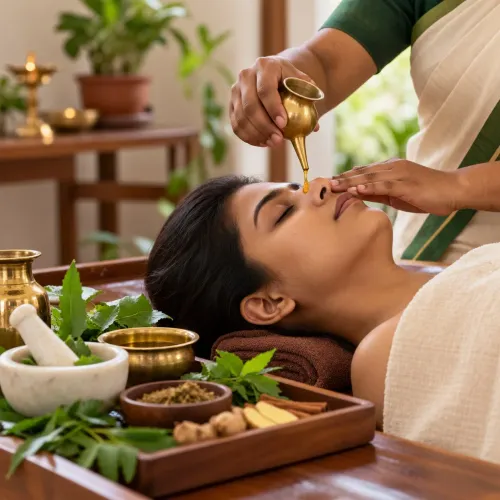
Ayurvedic care can fit as complementary support for routines, movement, stress, sleep, and nutrition, provided a clinician reviews every herb and procedure for interactions and pregnancy safety. Do not use it to delay glucose testing, menstrual protection, fertility treatment, or mental-health care. A single “dosha” or “toxin” explanation cannot cover these separate PCOS treatment goals.
What an Ayurvedic PCOS Consultation and Follow-Up Should Include
A responsible Ayurvedic consultation for PCOS starts with your goals and medical history, not a single dosha or “toxin” explanation. Expect questions about cycle length and skipped periods, bleeding, acne, facial hair, scalp hair loss, sleep, mood, medicines, eating patterns, activity, blood pressure, pregnancy plans, and family history of diabetes.
Ask the practitioner to review existing reports and coordinate missing assessment with a gynecologist or endocrinologist. Useful checks can include a pregnancy test when relevant, total or free testosterone, TSH, prolactin, 17-hydroxyprogesterone when indicated, glucose or HbA1c, lipids, blood pressure, and weight or waist measurements.
Your checklist should include:
- Record cycle tracking: dates, bleeding amount, pain, spotting, and signs of ovulation.
- Set a review date to assess symptoms, adverse effects, blood pressure, weight or waist, glucose risk, sleep, and mood.
- Ask what happens if periods remain absent; prolonged amenorrhea can require medical cycle protection, including periodic progestogen therapy.
- If seeking pregnancy, confirm that Panchakarma for PCOS is complementary. For anovulatory infertility without another factor, letrozole is guideline-recommended first-line ovulation induction.
- Reject claims that a protocol reverses PCOS, restores ovulation reliably, or prevents diabetes without human trial evidence for that exact protocol.
Marma Ayurved And Panchkarma Clinic can contribute through individualized lifestyle guidance and careful Ayurvedic PCOS follow-up, while referring for diagnosis, hormonal treatment, fertility care, abnormal bleeding, or metabolic monitoring. Do not postpone gynecology or endocrinology care for prolonged amenorrhea, heavy bleeding, or worsening symptoms.
How to Judge Safety, Progress, and the Need to Change Course
A plan is safe and effective only when it has measurable goals, scheduled checks, and a clear escalation rule. No period for 90 days, worsening bleeding, unchanged androgen symptoms, abnormal laboratory findings, or delayed conception requires review rather than indefinite continuation.
- Record bleeding dates, flow, acne or hair changes, medicines, weight or waist measurement, blood pressure, and side effects. This is practical PCOS monitoring, not a substitute for clinical assessment.
- Repeat tests on the schedule your clinician sets. Ask about glucose screening based on PCOS risk, not appearance; an oral glucose tolerance test is the most accurate glycaemic test in PCOS. Do not assume normal weight means low diabetes risk.
- Show every product label to a physician or pharmacist. Ayurvedic medicine safety depends on ingredients, dose, contamination control, and your other treatments; herb-drug interactions matter before pregnancy and with hormonal contraception, metformin, anticoagulants, or fertility medicines.
- Escalate prolonged amenorrhea or abnormal bleeding promptly because untreated absence of periods raises endometrial hyperplasia risk. Ask whether cycle regulation or periodic progestogen is needed.
- If pregnancy is the goal and ovulation does not return, request fertility evaluation. Panchakarma can only be complementary; letrozole is guideline-recommended first-line ovulation induction for anovulatory infertility when no other factor is present.
Do not stop metformin or prescribed contraception without advice. If goals remain unmet after the agreed review period, change the plan with a gynecologist or endocrinologist rather than adding more herbs.
Frequently asked questions
What does PCOS actually mean?
PCOS is a pattern involving ovulation problems, excess androgens, and polycystic-appearing ovaries. Adults generally need two of these three features after other causes are excluded.
How is PCOS diagnosed?
A clinician reviews your menstrual pattern, signs or blood tests for androgen excess, and ovarian findings when appropriate. They also exclude conditions such as thyroid disease, high prolactin, and non-classic congenital adrenal hyperplasia.
When do PCOS symptoms need prompt medical care?
Seek prompt care for very heavy bleeding, severe or sudden pelvic pain, fainting, pregnancy with pain or bleeding, or rapidly worsening androgen symptoms such as deepening voice.
What should an Ayurvedic PCOS consultation include?
A safe consultation includes your medical history, cycle record, medicines and supplements, relevant examination, recent investigations, treatment goals, and a follow-up plan. Do not stop prescribed treatment without the clinician managing it.
How can you judge whether PCOS treatment is working?
Track cycle dates, bleeding, acne, unwanted hair growth, weight changes, sleep, pain, and test results against a timeline agreed with your clinician. Change course when symptoms worsen, side effects appear, or planned goals are not progressing.