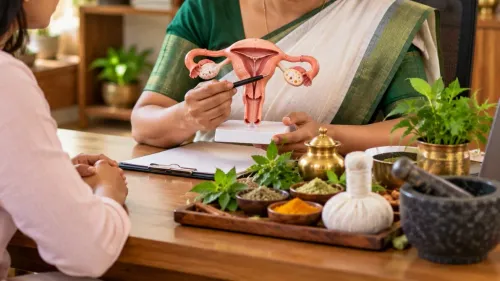
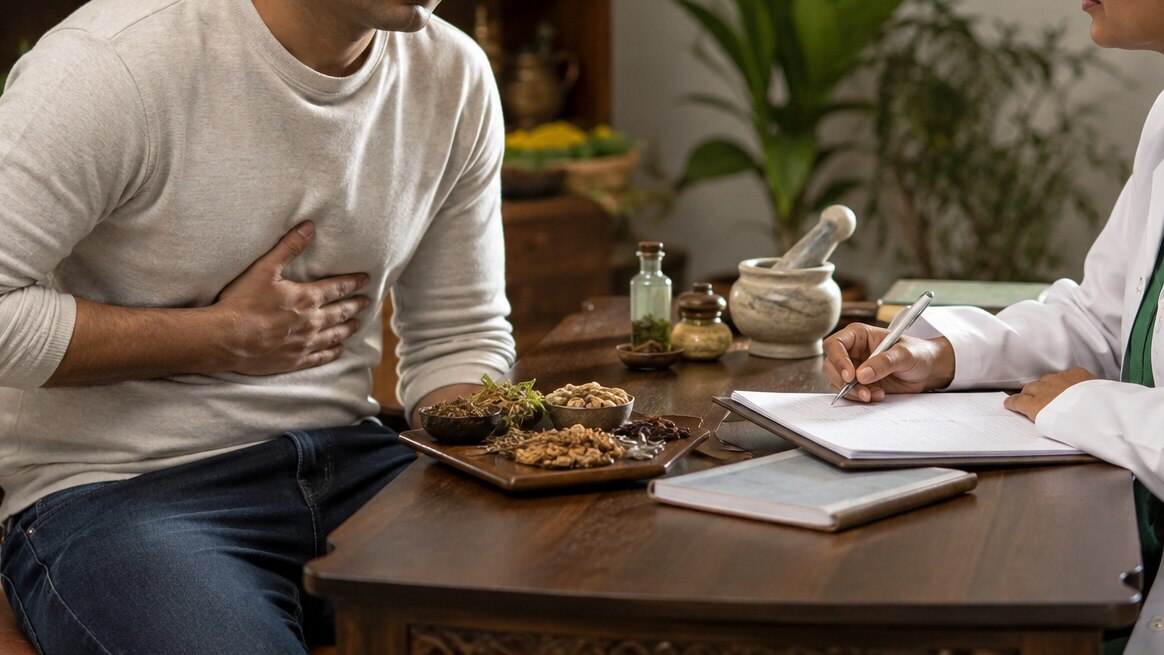
Burning behind the breastbone, sour regurgitation, bloating, and post-meal discomfort can reflect reflux, dyspepsia, medication irritation, ulcer disease, or a problem outside the digestive system. You will learn which symptoms need medical assessment, what to record before an Ayurvedic consultation, which daily changes are worth testing, and how to use Ayurvedic care without delaying proven diagnosis or treatment.
Key takeaways
- Seek urgent care for chest pressure, vomiting blood, black stools, or trouble swallowing.
- Record meals, symptoms, medicines, sleep position, and bowel habits before assessment.
- Test one trigger change at a time, including smaller meals and earlier dinners.
- Review Ayurvedic formulations and Panchakarma with a qualified clinician before starting treatment.
Is It Heartburn, Indigestion, or Something That Needs Urgent Care?
Heartburn usually feels like burning behind the breastbone, often with a sour taste or acid regurgitation. Recurring heartburn raises concern for gastroesophageal reflux disease (GERD), while indigestion, or dyspepsia, centres on upper-abdominal pain or burning, early fullness, or uncomfortable fullness after meals.
1. Seek emergency care now for chest pressure, breathlessness, sweating, pain spreading to your arm or jaw, or pain brought on by exertion. Cardiac pain can resemble indigestion, and an Ayurvedic remedy must not delay emergency assessment.
2. Arrange prompt medical assessment for vomiting blood, black stools, persistent vomiting, trouble swallowing, painful swallowing, unexplained weight loss, anaemia, or symptoms that begin after age 55. These signs can indicate bleeding, gastritis, a peptic ulcer, obstruction, or another condition requiring investigation.
3. Book a routine evaluation for recurring or worsening symptoms, even without warning signs. Gallbladder disease can cause upper-abdominal pain after meals, medicines such as ibuprofen can irritate the stomach, and persistent dyspepsia may need Helicobacter pylori testing or an ulcer assessment.
Occasional indigestion after a heavy meal is different from frequent reflux or pain that keeps returning. Record the pattern and seek medical advice before self-directed Ayurvedic treatment, fasting, or Panchakarma; traditional terms such as amlapitta do not rule out GERD, ulcer disease, medication irritation, gallbladder problems, or heart disease.
What to Record Before an Ayurvedic Assessment
Keep a seven-day symptom diary before your Ayurvedic diagnosis, and take it to a qualified clinician or Ayurvedic practitioner. Record each entry on the same day rather than relying on memory.
1. Write down every meal and snack time, then note how many minutes passed before symptoms began. Record burning behind the breastbone, sour taste or regurgitation, nighttime episodes, your sleep position, bloating, belching, bowel changes, appetite, and the total number of episodes during the week.
2. Mark patterns beside each entry: late dinner, caffeine, alcohol, unusually large meal, or lying down soon after eating. Note whether symptoms followed a particular food, woke you from sleep, or changed when you slept on your left side or raised your upper body.
3. Make a medication review list. Include over-the-counter medicines, NSAIDs such as ibuprofen, prescribed medicines, supplements, antacids, acid reducers, antibiotics, and previous acid treatments. Write the name, dose, timing, and reason for each; do not stop a prescribed medicine without its prescriber.
4. Expect questions about appetite, bowel movements, sleep, stress, food timing, abdominal symptoms, tongue appearance, and current medicines. In Ayurvedic practice, amla pitta is a traditional pattern used to organise symptoms, not a diagnosis of GERD, H. pylori infection, ulcer disease, gallbladder disease, or heart disease. Persistent or recurrent symptoms still require appropriate medical evaluation.
Daily Changes That Help You Test Your Triggers
Run a two-week trigger experiment, not an indiscriminate bland diet. Eat smaller meals at regular times, and finish dinner two to three hours before lying down. For nighttime reflux, raise the head of your bed with a wedge or blocks under the bedposts; extra pillows can bend your body without lifting the chest.
Review late dinners and alcohol as separate variables in your notes.
Use this checklist during the experiment:
- Reduce only foods that repeatedly precede your symptoms. Do not eliminate every spicy, sour, fermented, or “heating” food unless your own record identifies it as a trigger.
- Do not take baking soda repeatedly; excess sodium and altered body chemistry can cause harm.
- Avoid unlabelled powders because you cannot verify their ingredients, dose, contaminants, or medicine interactions.
- Do not assume one food causes all acidity. Symptoms can reflect meal size, timing, alcohol, medicines, reflux, or another condition.
- Avoid mint if it worsens reflux; it does not reliably treat the problem.
- Treat chest pain with breathlessness, sweating, pressure, or pain spreading to the arm or jaw as urgent, not as indigestion.
- Do not stop a prescribed acid-suppressing medicine abruptly. Ask the prescriber how to review or taper it.
Feeling better after changing your diet shows that the change helped symptoms; it does not prove that reflux, an ulcer, or an infection has been cured. Persistent symptoms still need medical assessment.
How Ayurvedic Care Compares with Standard Acid Treatments
Antacids neutralise acid, while alginates form a floating barrier that can reduce reflux; both are for short-term, occasional relief. H2 blockers reduce acid for longer than antacids, and proton-pump inhibitors (PPIs) suppress acid most strongly for sustained treatment. Repeated self-medication for frequent symptoms delays diagnosis.
| Option | Purpose and time frame | Important point |
|---|---|---|
| Antacids | Rapid, short-lived relief | Do not use repeated doses to manage recurring symptoms |
| Alginates | Short-term reflux relief after meals or at bedtime | Relief does not establish the cause |
| H2 blockers | Longer acid reduction than antacids | Review frequent use with a clinician |
| Proton-pump inhibitors | Sustained acid suppression | For typical GERD without alarm features, the American College of Gastroenterology supports once-daily treatment before a meal for eight weeks |
| Ayurvedic consultation and lifestyle guidance | Identify patterns, meal and sleep triggers, and sustainable changes | It complements evaluation; it does not confirm or cure GERD, ulcer disease, or infection |
A PPI is not generally addictive, but stopping prolonged treatment can cause temporary rebound acid-related symptoms. Do not stop PPIs, Helicobacter pylori treatment, anticoagulants, or another prescribed medicine without the prescriber’s involvement.
For persistent dyspepsia, arrange evaluation in this order:
- Ask about H. pylori testing when appropriate.
- Review NSAIDs, supplements, alcohol, and other medicines that irritate the stomach.
- Discuss testing for ulcer disease or another cause when symptoms persist, recur, or fail to respond.
An Ayurvedic term such as amlapitta can organise a traditional assessment, but it cannot replace these checks.
When Ayurvedic Formulations or Panchakarma Need Extra Caution
Panchakarma for acidity is not a routine cleanse or a proven way to remove excess acid. Purgation, emesis, enemas, fasting, and oil therapies lack high-quality evidence as GERD cures; inappropriate use can cause dehydration, electrolyte disturbance, aspiration, infection, or delayed diagnosis. “Natural” Ayurvedic formulations also carry risks, including heavy metal contamination.
| Procedure | Main concern | What can go wrong |
|---|---|---|
| Purgation | Fluid and salt loss | Dehydration or electrolyte disturbance |
| Emesis | Induced vomiting | Aspiration or tears |
| Enemas | Rectal administration | Infection or injury |
| Fasting | Restricted intake | Weakness, dehydration, delayed diagnosis |
| Oil therapies | Oral or procedural oils | Nausea, aspiration, or interactions |
Before using any product or procedure, ask for:
- The exact ingredient list, batch number, dose, and duration
- Testing records for lead, mercury, and arsenic
- An interaction review covering every medicine and supplement
- A plan for reporting adverse effects and obtaining follow-up care
Check whether a product contains glycyrrhizin-containing licorice, rather than assuming it is deglycyrrhizinated. Glycyrrhizin can raise blood pressure and lower potassium. Pregnancy, liver disease, kidney disease, hypertension, heart disease, or upcoming surgery require additional screening.
At Marma Ayurved And Panchkarma Clinic, an individual consultation is useful when it coordinates Ayurvedic guidance with medical evaluation, not when a cleanse replaces diagnosis, prescribed PPIs, H. pylori treatment, anticoagulants, or other prescribed care.
Frequently asked questions
How can you tell heartburn from indigestion?
Heartburn causes burning behind the breastbone, sour taste, or regurgitation. Indigestion causes upper-abdominal pain or burning, early fullness, or uncomfortable fullness after meals.
What symptoms require urgent medical care?
Seek urgent care for chest pressure, breathlessness, sweating, fainting, vomiting blood, black stools, persistent vomiting, or difficulty swallowing.
What should you record before an Ayurvedic assessment?
Record meal times and foods, symptom timing and severity, medicines and supplements, sleep position, bowel habits, weight changes, and previous diagnoses.
Which daily changes can help identify heartburn triggers?
Try smaller meals, finish dinner at least three hours before lying down, limit personal triggers, and test one change at a time.
How does Ayurvedic care compare with standard acid treatments?
Standard treatments target acid or reflux directly, while Ayurvedic care may focus on digestion, routines, diet, and individual assessment. Do not replace prescribed treatment without medical advice.