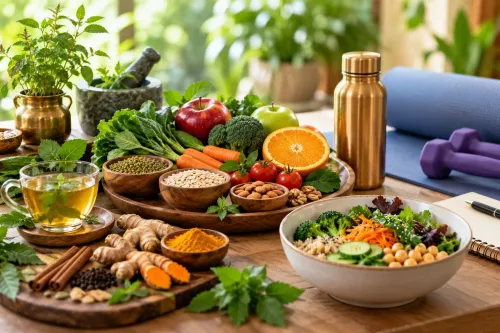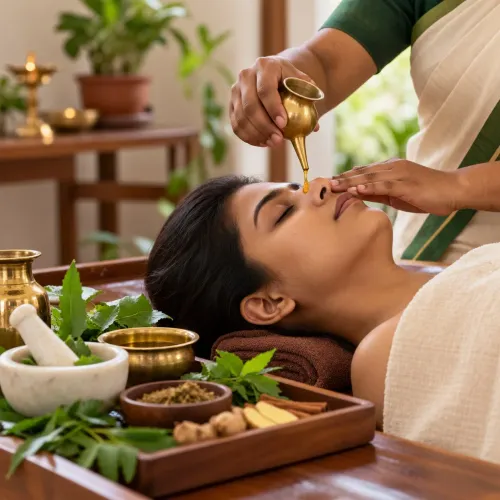
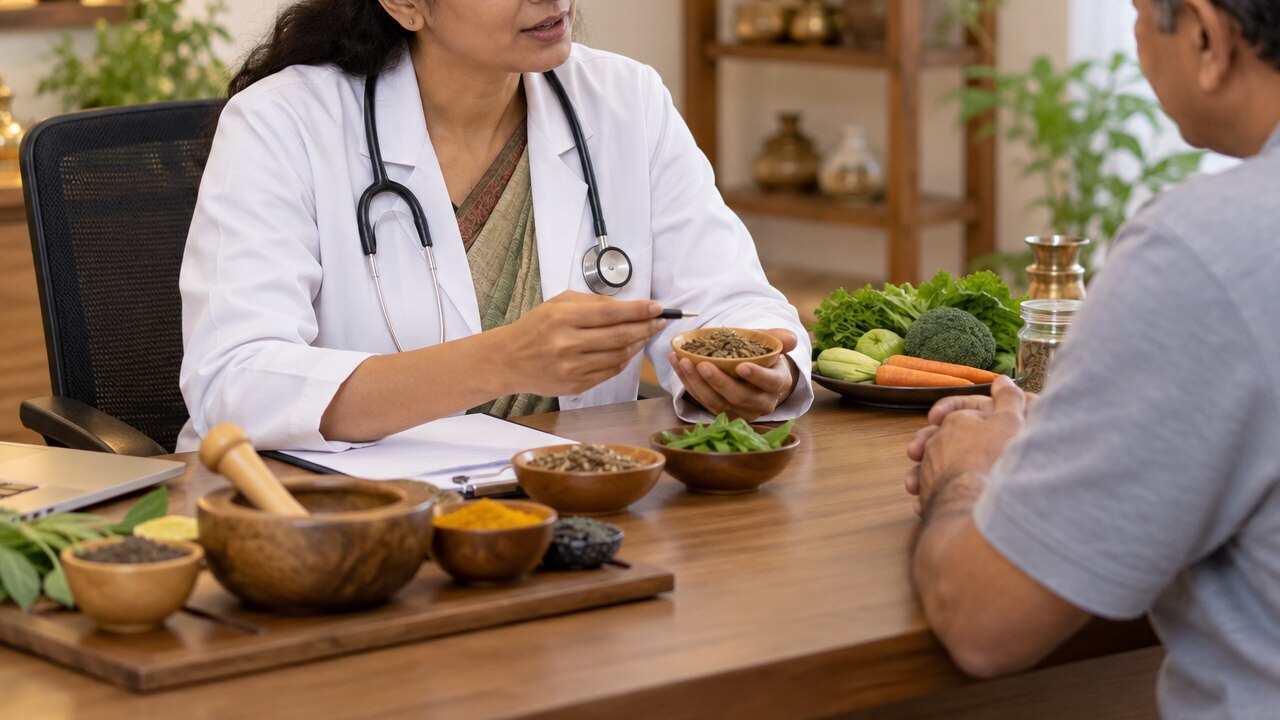
Ayurvedic care can help you build meals, movement, sleep and stress routines around your diabetes treatment, but it cannot replace insulin, prescribed medicines or glucose monitoring. By the end, you will know how to use lifestyle guidance safely, what to monitor, which Ayurvedic practices require caution and what to discuss with both your diabetes clinician and Ayurvedic practitioner.
Key takeaways
- Never stop insulin or prescribed diabetes medicines without your clinician.
- Track glucose, meals, activity and sleep to identify useful patterns.
- Check every herb for medicine interactions before taking it.
- Use Panchakarma only after medical review and personalised assessment.
Define Ayurveda’s Role Before Changing Your Diabetes Plan
Keep insulin, metformin, glucose monitoring and your diabetes clinician’s treatment plan in place. Ayurveda and diabetes care can work together as adjunctive care, not as substitutes. This distinction is critical in type 1 diabetes: stopping insulin can rapidly cause diabetic ketoacidosis.
Use an Ayurvedic practitioner for personalised lifestyle management, then confirm every treatment change with the clinician managing your diabetes:
1. Share your diagnosis, medicines, insulin doses, supplements, glucose readings, HbA1c, blood pressure and kidney results.
2. Use the consultation to adapt meals, activity, sleep, stress practices and daily routines to your culture, preferences and glucose pattern. Dosha or prakriti labels must not replace blood-glucose readings or standard risk assessment.
3. Discuss bitter melon, fenugreek, gymnema, cinnamon and other products before taking them. They can lower glucose unpredictably or intensify insulin and glucose-lowering medicines.
4. Review fasting, meal-skipping or cleansing in advance, especially if you use insulin or medicines that stimulate insulin release. Agree on glucose checks, medication adjustments, hydration and stopping rules.
Yoga, breathing exercises and meditation can support stress, sleep and self-management, but they are not reliable replacements for medication, nutrition therapy or prescribed exercise. Seek urgent medical assessment for repeated low readings, vomiting, inability to keep fluids down, confusion, severe weakness, rapid breathing or ketones—not further cleansing or herbs.
Build a Daily Routine Around Meals, Movement and Sleep
Steadier glucose levels come from repeatable timing and portions, not from calling a food Ayurvedic. Set diabetes meal timing around consistent breakfast, lunch and dinner times that fit your prescribed medicines and insulin schedule. Skipping meals or creating long fasting gaps can trigger hypoglycaemia when insulin or insulin-stimulating tablets are involved.
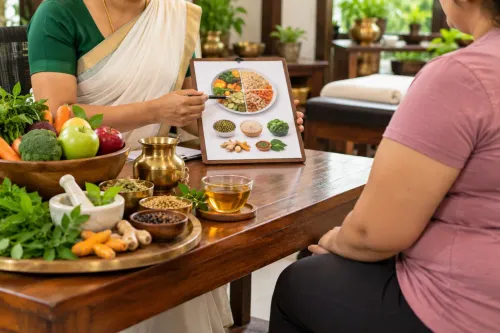
- Build Indian meals for diabetes around vegetables, pulses, curd or another protein, and a measured serving of rice, roti or other starch. Check carbohydrate portions rather than assuming jaggery, honey or “natural” sweeteners are safer.
- Prioritise fibre and protein for diabetes management by adding dal, beans, vegetables, unsweetened yoghurt, eggs, fish or tofu. These choices can make meals more filling and reduce rapid rises compared with a starch-heavy plate.
- Walk for 10 to 15 minutes after meals if your clinician has cleared exercise. Add strength training and other activity across the week, but check glucose and carry fast-acting carbohydrate if your treatment can cause lows.
- Keep a regular sleep window, aiming for seven to nine hours when possible. Use five minutes of slow breathing, meditation or gentle yoga to reduce stress without treating these practices as replacements for medicine.
Take prescribed medicines at the agreed times, and do not start fasting or a cleansing schedule without a diabetes clinician’s plan for glucose checks, hydration, medication adjustments and stopping symptoms. An Ayurvedic practitioner can tailor meal choices, activity and sleep routines to your glucose pattern, preferences and treatment.
Track the Numbers That Show Whether Your Plan Is Working
Record fasting glucose and post-meal glucose alongside meals, activity, sleep, medicines and any herbs or cleansing programme. Look for a pattern over several days rather than reacting to one reading. Use these results to discuss lifestyle changes with your diabetes clinician.
| Measurement | What it shows | When to seek review |
|---|---|---|
| Fasting glucose | Overnight glucose control | Repeated readings outside your agreed range |
| Post-meal glucose | Response to meal portions and composition | High readings after similar meals |
| HbA1c | Average glucose over about three months | At scheduled reviews or after a major treatment change |
| Blood pressure | Cardiovascular and kidney risk | Repeated readings above your clinician’s target |
| Weight | Change in nutrition, fluid balance or treatment response | Unplanned loss, rapid gain or persistent gain |
A lower reading after an Ayurvedic herb or cleanse does not prove that it is safe or prevents complications. Continue kidney-function tests, lipid checks, eye examinations and foot assessments because diabetes damage can progress without symptoms.
- Check with your diabetes clinician before fasting, skipping meals or sharply reducing carbohydrates, especially if you use insulin or a medicine that stimulates insulin release. Agree on glucose checks, medication changes, hydration and stopping rules.
- Seek urgent medical assessment for repeated low readings, vomiting, inability to keep fluids down, confusion, severe weakness, rapid breathing or ketones.
- Treat Ayurvedic labels such as dosha or prakriti as lifestyle context, not as replacements for HbA1c, glucose records, blood pressure or standard risk assessment.
Coordinate Medicines, Herbs and Panchakarma Without Creating New Risks
Do not add Ayurvedic herbs for diabetes or stop prescribed treatment without the clinician managing your diabetes. These products are not established substitutes for insulin, metformin, glucose monitoring or routine diabetes care. With type 1 diabetes, stopping insulin can rapidly cause diabetic ketoacidosis.
Treat each product as a medicine and disclose its exact name, strength, dose and frequency:
- Bitter melon
- Fenugreek
- Gymnema
- Cinnamon
These herbs can lower glucose unpredictably and intensify insulin or glucose-lowering medicines, causing hypoglycaemia. Check glucose more closely after starting, stopping or changing any supplement, and never adjust insulin independently.
Review fasting, meal-skipping or a cleansing diet before you begin. Your diabetes clinician should set the glucose-check schedule, medication changes, hydration plan and stopping criteria; reduced food intake is particularly risky with insulin or medicines that stimulate insulin release.
Panchakarma involving prolonged fasting, induced vomiting, purgation, enemas, sweating or substantial fluid loss can cause dehydration, electrolyte disturbance, kidney stress and unstable glucose. Avoid unsupervised home procedures, and disclose kidney or heart disease, pregnancy and every medicine before treatment.
Stop the regimen and seek urgent medical assessment for:
- Repeated glucose readings below your agreed range
- Vomiting or inability to keep fluids down
- Confusion, severe weakness, rapid breathing or ketones
Do not respond to these signs with further fasting, cleansing or herbal doses.
Prepare for an Individual Consultation and Know When Advice Must Differ
Bring a complete medication and health record to an Ayurvedic consultation for diabetes. Include insulin or tablets, doses and timing, recent fasting and post-meal glucose readings, HbA1c, episodes of hypoglycaemia, allergies, supplements, herbal products, eating pattern, activity, sleep, and planned fasting or cleansing.
Report kidney, liver, heart, nerve, eye and blood-pressure problems, plus pregnancy or breastfeeding.
Ask the practitioner to review:
- The exact name, strength and daily dose of every herb, including bitter melon, fenugreek, gymnema or cinnamon.
- Your usual carbohydrate portions, including rice, wheat, fruit, honey, jaggery and sweetened drinks.
- Your glucose-checking schedule, medication plan and clear stopping rules for fasting, exercise or new products.
| Diabetes type | How advice differs | Main safeguard |
|---|---|---|
| type 1 diabetes | Lifestyle support cannot replace insulin or glucose monitoring | Stopping insulin can rapidly cause diabetic ketoacidosis |
| type 2 diabetes | Meal structure, activity and weight goals can complement prescribed treatment | Review changes that could cause hypoglycaemia |
| prediabetes | Emphasise prevention through sustainable habits and weight management | Confirm progress with glucose testing and HbA1c |
| gestational diabetes | Use pregnancy-specific meal and activity advice | Avoid unsupervised fasting or herbs; coordinate with the obstetric team |
Kidney disease, liver disease, recurrent hypoglycaemia or pregnancy can change which foods, herbs and therapies are safe. Marma Ayurved And Panchkarma Clinic should therefore build recommendations around your medical records, not Ayurvedic labels alone.
Frequently asked questions
Can Ayurveda replace insulin or prescribed diabetes medicines?
No. Ayurveda is adjunctive care. Keep insulin, metformin, glucose monitoring and your diabetes clinician’s treatment plan in place. Stopping insulin in type 1 diabetes can rapidly cause diabetic ketoacidosis.
What daily habits should support diabetes management?
Build consistent routines around balanced meals, regular movement, adequate sleep and glucose checks. Record these factors together so you can identify patterns instead of changing several variables at once.
Which numbers should you track?
Track the glucose readings your clinician recommends, along with meal timing, carbohydrate intake, physical activity, sleep and symptoms. Review the record with your diabetes clinician before changing treatment.
How can you use herbs or Panchakarma more safely with diabetes treatment?
Show your clinician and Ayurvedic practitioner every medicine and supplement you take. Confirm ingredients, doses and timing, and use Panchakarma only after individual assessment because fasting, dehydration or treatment changes can affect glucose control.