Back pain alone does not prove that a disc has slipped, and radiating leg pain, numbness or weakness requires a more careful assessment. By the end, you will know how diagnosis is confirmed, when Ayurvedic care may support recovery, which warning signs require urgent medical attention, and when to consider physiotherapy, injections or surgery.
Key takeaways
- Seek urgent care for bladder changes, saddle numbness, or worsening leg weakness.
- Confirm the diagnosis with a clinical examination and MRI when indicated.
- Use Ayurvedic care alongside medical supervision, not as a substitute for emergency treatment.
- Compare recovery goals, evidence, risks, cost, and follow-up before choosing treatment.
What does “slip disc” mean, and when is it an emergency?
The phrase “slip disc” usually means a lumbar intervertebral disc herniation: inner disc material pushes through a tear in the outer ring. The slip disc meaning is not established by back pain alone; many causes produce similar pain.
A bulging disc vs herniated disc comparison is straightforward: a bulge extends broadly beyond the disc’s normal edge, while a protruded or herniated disc pushes out more focally and can irritate a nerve. Degenerative disc disease describes age- or wear-related disc changes, not necessarily a herniation.
Spinal stenosis is narrowing around the spinal nerves; spinal stenosis symptoms include leg pain, numbness or weakness that worsens with standing or walking and eases when sitting or bending forward.
Sciatica—pain travelling from the back into the buttock or leg—becomes more suggestive of nerve-root irritation when numbness or weakness accompanies it. Back pain without leg symptoms does not confirm nerve compression.
Seek urgent conventional medical assessment rather than trying massage, Panchakarma or herbal treatment first if you have:
- New loss of bladder or bowel control, difficulty starting urination, or numbness around the genitals or anus (saddle numbness).
- Progressive leg weakness, severe weakness in both legs, or inability to walk normally.
- Fever with severe back pain, significant trauma, or a history of cancer.
These signs can indicate cauda equina syndrome, infection, fracture or malignancy and need prompt evaluation.
How is a slipped disc confirmed before treatment begins?
Slip disc diagnosis begins with a physical examination, not a scan. A clinician checks spinal movement, walking pattern, pain distribution and the response to a straight-leg raise, which can reproduce nerve-related leg pain. Back pain without leg symptoms does not establish a disc herniation.
A neurological examination for sciatica then tests muscle strength, skin sensation and tendon reflexes in both legs. Weakness, altered sensation or reduced reflexes can identify nerve-root involvement and show whether the problem is worsening.
| Assessment | What it checks | What the result means |
|---|---|---|
| Physical examination | Movement, gait, straight-leg raise and pain location | Shows whether symptoms behave like mechanical back pain or nerve irritation |
| Neurological examination | Strength, sensation and reflexes | Identifies possible nerve damage and the affected nerve pattern |
| Lumbar MRI | Disc, nerve-root and spinal structures | Confirms anatomy when imaging could change treatment decisions |
A lumbar MRI is considered for persistent or disabling sciatica, progressive neurological findings or possible surgery. This explains when MRI is needed for back pain: routine imaging is not required for uncomplicated low-back pain. An MRI finding must match the painful side, affected nerve pattern and examination results.
A scan showing a disc bulge does not automatically explain your symptoms. It also does not prove that Ayurvedic treatment, medication or surgery is necessary; the treatment decision depends on symptoms, examination findings, function and their progression.
What can Ayurvedic spine care involve, and what can it realistically change?
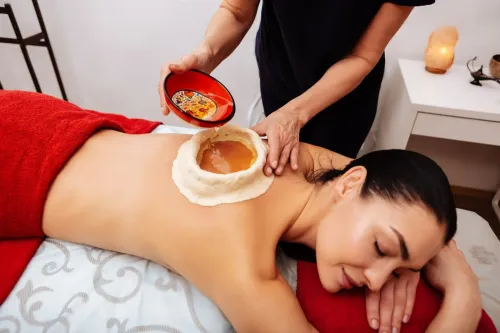
A practical Ayurvedic treatment for slip disc starts with a consultation, not an oil application. The practitioner reviews your diagnosis, pain pattern, medicines and health history, then assesses movement, posture, walking, strength and sensation. Record baseline function so progress is measured beyond a short-term pain score.
A plan may include:
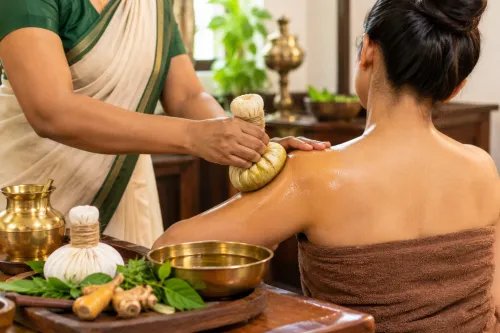
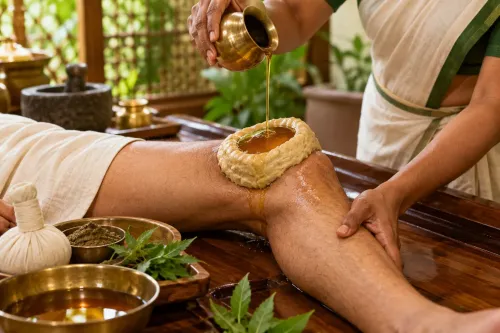
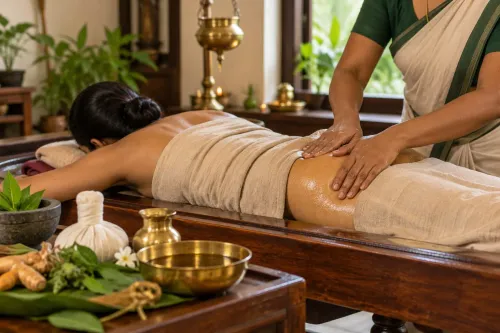
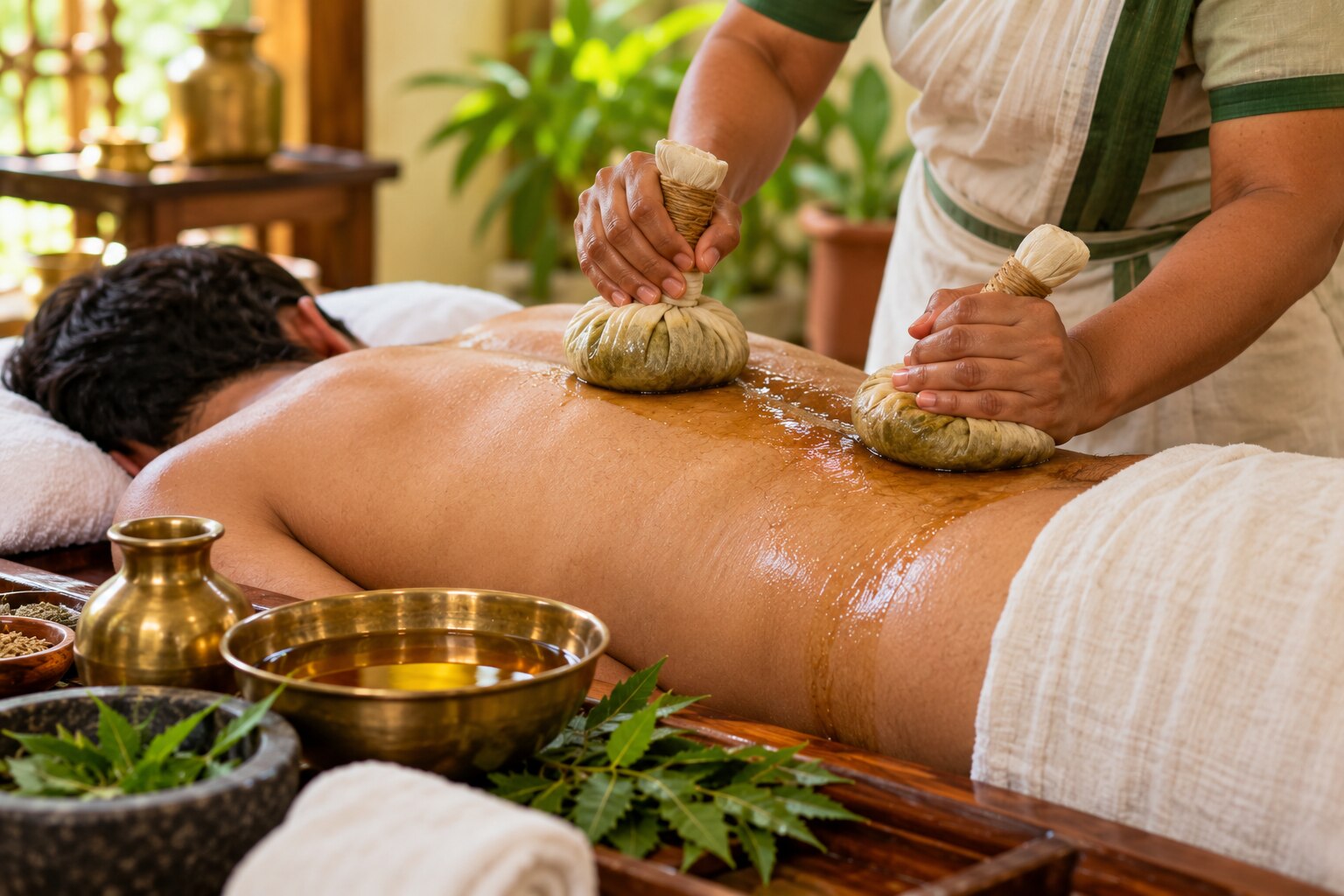
- Local oil application for painful or stiff areas.
- Ayurvedic massage for sciatica, adjusted if leg pain or nerve symptoms worsen.
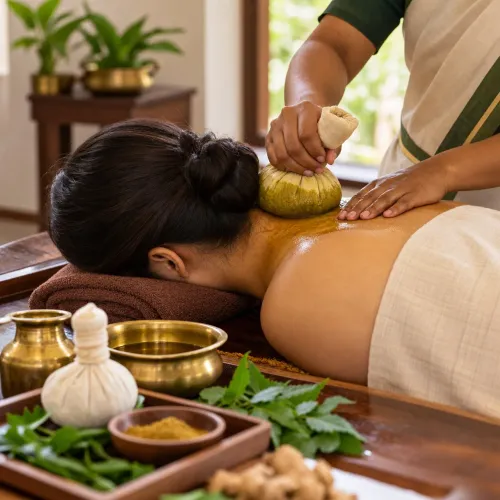
- Heat treatments, stopped if they increase swelling, burning or pain.
- Graded exercise and posture guidance to support rehabilitation.
- Scheduled follow-up to review leg pain, walking tolerance, strength, sensation and daily activities.
The realistic aim is less pain, better mobility, easier walking and greater participation in rehabilitation. Ayurvedic oil therapy for back pain cannot be presented as physically removing a disc fragment or reversing nerve compression. Hands-on relief does not prove that the herniation has healed.
Watchful recovery is also part of disc herniation recovery. A meta-analysis reported spontaneous regression in about 70% of extruded discs and 93% of sequestered discs, so improvement after treatment does not prove that oil or massage repositioned the disc.
Tell your doctor and practitioner about every oral Ayurvedic product. Request the exact ingredients, dose, manufacturer and quality-control information; some products have contained toxic lead, mercury or arsenic. “Natural” does not mean contaminant-free.
When does Panchakarma fit into slip-disc care?
Panchakarma for slip disc is not an automatic package. A practitioner should consider selected procedures only after reviewing the diagnosis, pain severity, neurological findings, medicines, hydration status and general health. Back pain alone does not justify an intensive protocol.
| Procedure | Main risks | Safety checks |
|---|---|---|
| Purgation | Dehydration and electrolyte disturbance | Review kidney, heart and bowel conditions and medicines |
| Induced vomiting | Aspiration, dehydration and electrolyte disturbance | Check swallowing, breathing, pregnancy and frailty |
| Fasting | Weakness, low blood sugar and medicine-related complications | Review diabetes, nutrition, medicines and hydration |
| Enemas | Infection, fluid shifts and bowel injury | Use appropriate equipment and assess bowel, infection and immune risks |
Severe acute pain, active inflammation, infection, pregnancy, frailty, significant neurological weakness or an unstable medical condition call for postponement or medical review. Progressive weakness, increasing numbness, inability to walk normally, fever or new bladder or bowel symptoms require conventional assessment rather than treatment at a clinic.
These are central Panchakarma contraindications and part of Panchakarma safety; Ayurvedic enema risks deserve specific discussion.
Before agreeing, ask:
- Which exact procedure is proposed, and what is its purpose?
- What preparation, supervision, monitoring and medicines review are required?
- Which symptoms would stop treatment and trigger urgent medical care?
- What is the plan if pain, weakness, dehydration or infection develops?
How should you compare Ayurvedic care with other treatment options?
Choose conservative care by tracking pain duration, leg symptoms, strength, reflexes, MRI correlation and functional progress—not by comparing short-term pain scores alone. The Ayurveda vs physiotherapy for sciatica decision should favour exercise-based rehabilitation when you can participate; hands-on therapy belongs alongside exercise, not as its stand-alone substitute.
| Option | Best use | Important limit |
|---|---|---|
| Maintain normal activity | Keep walking and daily movement within tolerable limits | Prolonged bed rest can worsen deconditioning |
| Exercise-based physiotherapy | Build strength, mobility and confidence | Progress must match pain, weakness and examination findings |
| Prescribed pain medicine | Make movement and rehabilitation possible | Use only as directed and review adverse effects |
| Watchful waiting | Mild or improving symptoms without neurological decline | Set a review date; do not wait indefinitely |
| Epidural injection for sciatica | Selected severe acute leg pain when rehabilitation is blocked | Relief may be temporary and does not remove the disc |
| Spinal decompression | Persistent disability after nonsurgical care fails | MRI findings must match symptoms and examination |
Set a defined review period and record leg pain, walking tolerance, sensation, strength and daily activities. An oil massage can reduce discomfort without proving that the herniation healed, and evidence is insufficient to claim Panchakarma cures disc herniation.
If symptoms fail to improve, disability persists or weakness progresses, seek a spine specialist review. When is surgery needed for herniated disc? Consistent MRI findings plus ongoing impairment can support decompression. Marma Ayurved And Panchkarma Clinic can provide structured Ayurvedic assessment and follow-up when coordinated with medical evaluation for red flags or neurological deficits.
Related service
Bone & Joint Disorders Ayurvedic Treatment Bone & Joint Disorders Ayurvedic Treatment Natural Bone & Joint Care at Marma Ayurveda and Panchakarma Clinic At Marma Ayurveda and Panchakarma Clinic, Dr. View service → |
Frequently asked questions
What does “slip disc” mean, and when is it an emergency?
“Slip disc” usually describes a herniated intervertebral disc, in which inner disc material extends through a tear in the outer ring. Seek emergency medical care for new bladder or bowel control problems, numbness around the genitals or anus, or rapidly worsening leg weakness. These symptoms can indicate cauda equina syndrome or serious nerve compression.
How is a slipped disc confirmed before treatment begins?
A clinician reviews your symptoms, checks strength, sensation, reflexes, walking, and nerve tension, then decides whether imaging is needed. MRI shows discs and nerve compression most clearly. Back pain alone does not confirm a slipped disc, and imaging findings must match your symptoms.
What can Ayurvedic spine care involve, and what can it realistically change?
A personalised plan can include movement guidance, supervised manual therapies, heat-based treatments, exercise, sleep and activity advice, and prescribed Ayurvedic medicines. It may support pain management, mobility, and daily function, but it cannot be assumed to remove a herniated disc or reverse nerve damage. Discuss medicines with a qualified clinician because herbal products can interact with prescription drugs or contain contaminants.
When does Panchakarma fit into slip-disc care?
Panchakarma should be considered only after medical assessment identifies a stable situation without emergency nerve compression. A qualified practitioner must adapt the programme to your diagnosis, medicines, strength, and symptoms. Do not delay urgent neurological assessment for cleansing procedures, fasting, strong massage, or forceful manipulation.
How should you compare Ayurvedic care with other treatment options?
Compare each option by its goal, evidence, risks, cost, time commitment, and follow-up plan. Ask whether it includes physiotherapy, what improvement will be measured, who manages worsening neurological symptoms, and when referral to an orthopaedic or spine specialist occurs. Keep emergency care and medically indicated surgery available when symptoms require them.