
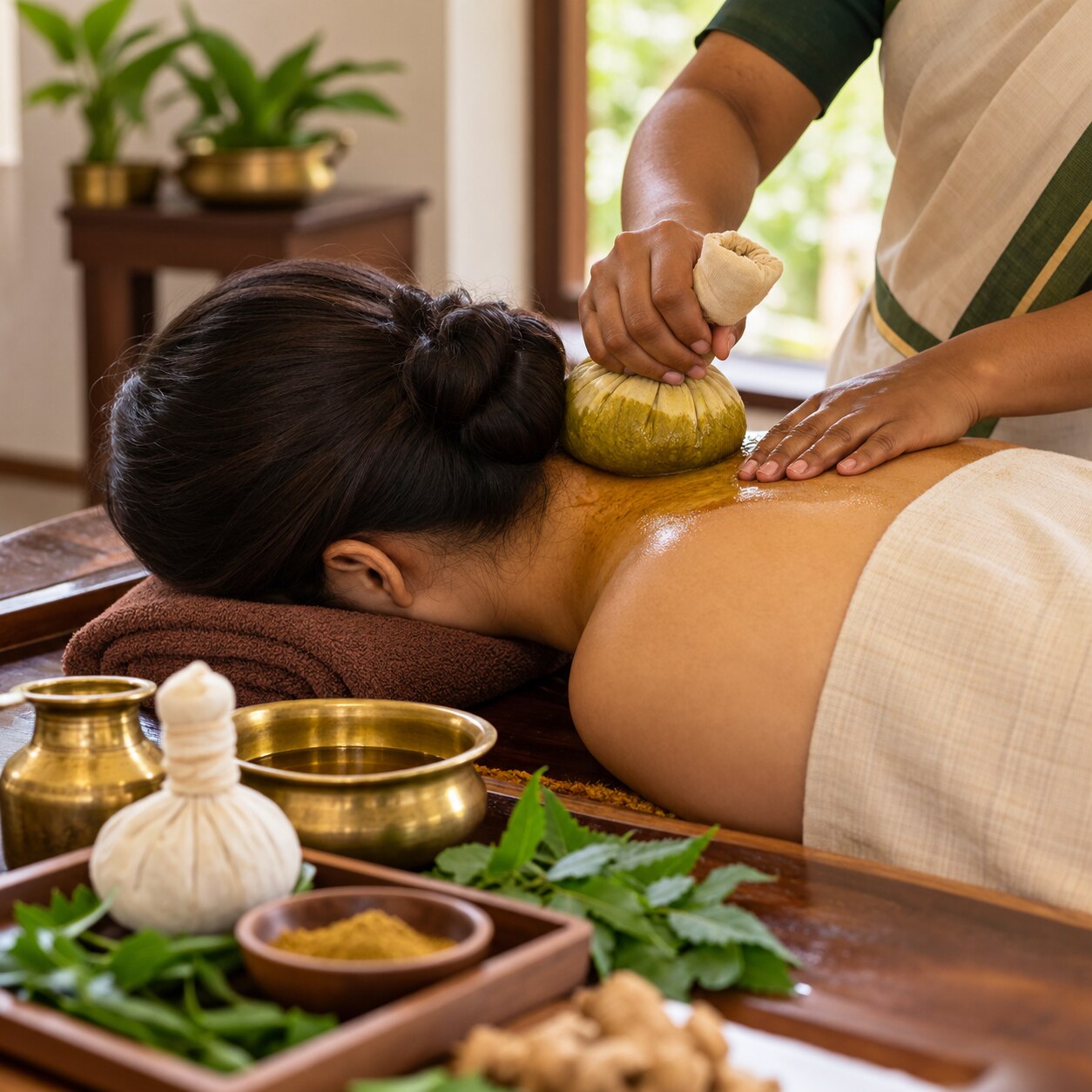
Neck stiffness can result from age-related changes in the cervical spine, muscle guarding, nerve irritation, or a problem unrelated to spondylosis. You will learn how to recognise the pattern, identify symptoms that need prompt medical assessment, and discuss Ayurvedic care without delaying neurological evaluation or relying on unsupported promises of structural repair.
Key takeaways
- Seek urgent care for weakness, balance problems, or loss of bladder control.
- A clinician may assess reflexes, strength, sensation, movement, and imaging results.
- Treatment can combine supervised therapies, exercises, posture changes, and symptom monitoring.
- Stop or review treatment if pain, numbness, or weakness worsens.
Why Cervical Spondylosis Makes the Neck Feel Stiff
Cervical spondylosis makes the neck stiff through several linked changes. Cervical disc wear can reduce the space and shock absorption between vertebrae, while altered facet joints become irritated and limit smooth movement. Pain then triggers muscle guarding: muscles around the neck tighten to protect the area, which further restricts rotation and creates aching or pressure.
Common symptoms include reduced ability to turn or tilt your head, pain at the base of the skull, shoulder discomfort, and headaches that begin in the neck. Stiffness alone does not prove cervical spondylosis; muscle strain, migraine, inflammatory disease, infection, or injury can cause similar symptoms.
X-ray or MRI changes also occur in people without pain, so images must match your symptoms and examination.
| Pattern | What it may suggest | Symptoms that need attention |
|---|---|---|
| Local stiffness | Muscle guarding, disc or facet-joint irritation | Aching, reduced rotation, pain linked to movement |
| Nerve involvement | Possible cervical radiculopathy from nerve compression | Pain spreading into an arm, tingling, numbness, or weakness |
| Spinal-cord involvement | Possible cervical myelopathy | Loss of hand dexterity, worsening weakness, balance or walking problems, widespread numbness, or bowel or bladder changes |
Progressive neurological symptoms, fever, unexplained weight loss, severe trauma, or rapidly worsening pain require prompt medical assessment rather than massage, herbal treatment, or neck manipulation.
When Neck Stiffness Needs Medical Assessment First
Ordinary muscular stiffness usually follows awkward posture, overuse, or an unusual sleep position. It improves with gentle movement or warmth and stays local, without tingling, numbness, or loss of strength. Pain shooting into the shoulder or arm, with pins-and-needles or numbness, suggests cervical radiculopathy rather than simple muscle tightness.
Seek prompt medical assessment if you have any of these warning signs:
- New or progressive arm weakness, leg weakness, hand coordination loss, clumsy hands, balance trouble, or walking difficulty. These features can indicate cervical myelopathy from spinal-cord compression.
- Numbness affecting both arms or legs, or a new change in bladder or bowel control. Treat these as urgent neurological symptoms.
- Neck pain after a fall, collision, or direct blow, especially if you have osteoporosis or take long-term steroids. A fracture must be excluded before massage or exercise.
- Fever, marked morning stiffness with swollen joints, or feeling acutely unwell. These signs raise concern about infection or inflammatory disease.
- Unexplained weight loss, a history of cancer, immune suppression, or severe pain that remains intense at night. These findings need evaluation for causes beyond uncomplicated spondylosis.
Do not let brief relief from heat or gentle massage reassure you that compression has resolved. Avoid forceful manipulation, aggressive traction, and extreme neck rotation until a clinician has assessed possible nerve or spinal-cord involvement. Migraine and other pain conditions also need a different treatment plan.
How a Clinician Confirms the Likely Cause
Diagnosis starts with a focused history and physical examination, not a scan. The clinician asks about onset, movement-related triggers, symptom spread, and associated neurological symptoms, while checking for trauma, fever, weight loss, or rapidly worsening pain.
A neurological examination looks for nerve-root or spinal-cord involvement. It includes:
- Arm and hand strength
- Reflexes
- Sensation
- Hand coordination
- Walking and balance
The clinician also tests neck movement and examines the shoulders and surrounding muscles. This helps distinguish local muscle guarding from radiculopathy, muscle strain, inflammatory disease, or another cause. Progressive weakness, poor hand dexterity, gait problems, widespread numbness, or bowel or bladder disturbance requires prompt medical assessment.
A cervical spine X-ray helps assess alignment, fractures, disc-space narrowing, and bony overgrowth. It shows bone better than nerves or the spinal cord, so a normal result does not exclude nerve compression.
A cervical MRI helps when arm pain, numbness, weakness, an abnormal neurological examination, or suspected spinal-cord compression needs clarification. It shows the discs, nerve roots, and cord. CT can define bone injury after significant trauma, while blood tests help investigate infection or inflammatory disease.
Imaging findings are common in people without neck pain. A clinician therefore matches each result to your symptoms and neurological examination instead of treating degeneration on a scan as proof of the cause.
What an Ayurvedic Treatment Plan Can Include
An Ayurvedic plan can support neck comfort while staying inside a diagnosis-led programme: a clinician identifies the likely pain source and neurological risk, then uses traditional procedures for symptoms rather than claiming to reverse disc or facet-joint degeneration.
An Ayurvedic assessment can document stiffness, movement limits, muscle guarding, sleep, activity and treatment tolerance, while a medical assessment addresses radiculopathy, spinal-cord signs, injury and other causes. Seek prompt clinical review for new weakness, worsening numbness, poor hand coordination or walking difficulty; do not use massage or herbs to delay it.
A safe plan should specify:
- Abhyanga: gentle oil massage aimed at muscle tension or comfort, stopped if pain radiates, numbness increases or symptoms worsen.
- Swedana: controlled fomentation or warmth for short-term stiffness relief, not proof that damaged joints or discs have healed.
- Therapeutic exercise: graded neck, shoulder and upper-back movement that protects function; prolonged rest and routine collar use can increase stiffness.
- Other Panchakarma procedures, such as shirodhara or basti: considered only when the practitioner gives a clear purpose, method and safety rationale rather than relying on the label alone.
- Progress measures: pain score, neck rotation, sleep, work tolerance and arm symptoms reviewed at set intervals.
At Marma Ayurved And Panchkarma Clinic, ask for this symptom-targeted plan in writing so you can compare procedure effects with exercise-based rehabilitation and stop treatment if neurological symptoms appear.
How to Judge Progress and Use Treatment Safely
Before agreeing to treatment, ask which procedure is planned—abhyanga, swedana, shirodhara, basti, or another Panchakarma procedure—and whether its aim is pain relief, reduced muscle tension, or better neck function. The Panchakarma label does not prove that cervical disc or joint degeneration will reverse; set expectations around symptom relief and movement.
1. Confirm the session frequency and total treatment duration, including the date for review. A credible plan states measurable treatment goals, such as turning your head farther, sleeping better, or reducing pain from 7/10 to 4/10.
2. Request the name, ingredients, dose, manufacturer, batch number, and quality testing for every oral Ayurvedic medicine. “Natural” does not guarantee safety; some products have contained lead, mercury, or arsenic.
Review them with your clinician if you take anticoagulants, diabetes or thyroid medicines, sedatives, or narrow-therapeutic-range drugs, and never stop a prescribed medicine without its prescriber.
3. Get specific home instructions: posture correction, gentle movement, prescribed exercises or physiotherapy, activity limits, and whether heat or massage is appropriate. Prolonged immobilization and routine soft-collar use can increase stiffness.
4. Agree on stop criteria. Stop the procedure and seek medical assessment for new weakness, spreading numbness, worsening arm pain, balance or walking problems, or a significant medicine reaction. Reassess if function and pain do not improve by the agreed review date.
Frequently asked questions
Why does cervical spondylosis cause neck stiffness?
Disc wear, irritated facet joints, reduced movement, and protective muscle tightening can all restrict neck rotation and cause aching or pressure.
When does neck stiffness need medical assessment first?
Seek medical assessment before Ayurvedic treatment if stiffness follows significant injury or occurs with arm weakness, spreading numbness, clumsy hands, balance problems, fever, severe headache, or bladder or bowel changes.
How does a clinician confirm the likely cause of neck stiffness?
A clinician reviews your symptoms and examines neck movement, muscle strength, sensation, reflexes, and walking. X-rays or MRI scans may be used when findings suggest nerve or spinal cord involvement.
What can an Ayurvedic treatment plan for cervical spondylosis include?
A supervised plan may include selected external therapies, gentle movement, posture changes, activity modification, and prescribed Ayurvedic medicines after reviewing your symptoms, medical history, and current medicines.
How can you judge whether treatment is working safely?
Track pain, neck rotation, sleep, daily activities, numbness, and strength. Arrange review when symptoms worsen, new neurological symptoms appear, or progress remains unclear.