Knee pain can come from osteoarthritis, an injury, inflammation, swelling, weakness, or pain referred from the hip or back, so the right mobility plan depends on identifying the cause first. You will learn how to check your movement safely, understand how Ayurvedic options may be selected, and measure progress without confusing temporary pain relief with restored knee function.
Key takeaways
- Check knee bending, straightening, walking, and stair use before treatment.
- Match Ayurvedic therapies to your symptoms, diagnosis, activity limits, and recovery stage.
- Ask about expected benefits, safety, session frequency, home care, and referral signs.
- Track pain, knee range of motion, walking distance, and stair ability over time.
Which Knee Problems Can Affect Mobility?
Knee osteoarthritis is the main cause addressed here, especially gradual pain, knee stiffness after inactivity, reduced bending or straightening, and difficulty walking or using stairs. Other knee pain causes include overuse, muscle weakness, pain after surgery, and some stable ligament or meniscus injuries.
The correct treatment depends on the cause, so Ayurvedic care should complement—not replace—medical assessment when the diagnosis is uncertain.
| Problem | Clues that affect mobility | Priority |
|---|---|---|
| Knee osteoarthritis | Gradual pain with walking, stairs or chair rising; stiffness after rest | Clinical assessment and individualized strengthening |
| Overuse or stiffness | Pain after increased activity, prolonged sitting or repetitive kneeling | Reduce aggravating load and assess persistent symptoms |
| Ligament or meniscus injury | Pain after twisting, giving way, clicking or catching | Examination before massage, heat or exercise |
| Gout or inflammatory arthritis | Sudden severe pain, warmth and swollen knee symptoms | Prompt medical assessment |
| Pain referred from the hip or back | Knee pain with hip movement, back pain or altered sensation | Assessment of the hip, spine and nerves |
Seek medical care before considering Ayurvedic care if you cannot bear weight, the knee is locked, or symptoms followed major trauma. Get urgent assessment for a hot, red, markedly swollen knee with fever; infection can damage the joint quickly.
Ayurvedic treatment is not one standardized intervention. Massage, heat, exercise, oral products and Panchakarma have different risks and evidence; traditional use does not prove that a package repairs cartilage or reverses osteoarthritis.
How Can You Check Knee Mobility and Seek the Right Assessment?
A useful knee mobility test compares both sides without forcing pain. Note whether you limp, avoid weight, struggle on stairs, use your arms to rise from a chair, or cannot fully bend or straighten the knee.
- Walk 10 metres at a comfortable pace, turn, and return. Record pain, limping, instability, and whether the knee gives way.
- Complete a walking and stair assessment by climbing several steps with a handrail, then stepping down. Difficulty descending often reflects reduced control or quadriceps weakness.
- Rise from a firm chair without pushing with your hands. Stop if the knee buckles or sharp pain appears.
- Sitting or lying down, slowly bend the knee and compare the heel’s distance from your buttock with the other side. This checks knee flexion.
- Place a small towel under the ankle while lying down and let the knee relax. A persistent gap beneath the knee indicates incomplete full extension; do not press it flat.
A clinician takes a history of onset, injury, morning stiffness, swelling, fever, previous surgery, medicines, and activity. The examination includes a gait examination, knee range of motion, alignment, swelling, warmth, tenderness, ligament stability, meniscus signs, muscle strength, and hip or back problems that can refer pain.
Typical osteoarthritis often needs no routine imaging because symptoms and examination are sufficient. X-ray, ultrasound, or MRI matters when pain is severe, rapidly worsening, unusual, follows significant injury, or suggests another condition. Blood tests help when infection, gout, rheumatoid arthritis, or another inflammatory disease is possible.
Seek prompt care for a hot swollen knee with fever, inability to bear weight, or a locked joint.
How Are Ayurvedic Therapies Matched to Your Knee Symptoms?
Match the plan to the dominant problem, not to the label “knee pain.” Ayurvedic treatment for knee pain can combine movement, massage, heat, diet, medicines and Panchakarma, but no package has proven it can rebuild cartilage.
| Symptom pattern | Suitable emphasis | Avoid or delay |
|---|---|---|
| Stiffness after sitting | Gentle range-of-motion work, local oil application, abhyanga and swedana heat therapy when the knee is not hot or acutely swollen | Forceful stretching or prolonged sitting |
| Inflammation or swelling | Medical assessment, activity reduction and carefully dosed exercise after serious causes are excluded | Vigorous massage, strong heat or deep pressure over a hot, red knee |
| Weakness | Quadriceps strengthening, sit-to-stand practice and gradual walking | Relying on massage alone; exercise is the key mobility treatment |
| Acute injury, locking or instability | Protection and prompt clinical assessment; resume rehabilitation only after guidance | Panchakarma, heat or stretching before the injury is assessed |
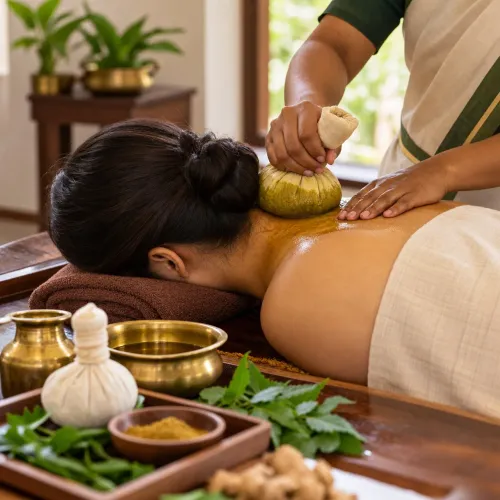
For oil application, use a small amount of comfortably warm oil on intact skin and massage lightly around the knee; stop for burning, rash or increased swelling. Abhyanga should support movement, not replace strengthening. Use swedana only when heat feels soothing and there is no marked swelling, redness, fever or recent trauma.
Stretch slowly within a comfortable range, without bouncing. Strengthen on alternate days with exercises a clinician or physiotherapist has checked, then walk on level ground in short sessions. Reduce distance if you limp or swelling lasts into the next day; rest, elevate the leg and seek assessment when symptoms escalate.
What Should You Ask Before Starting an Ayurvedic Knee-Mobility Plan?
Ask for a written plan that explains why each treatment matches your symptoms, what improvement will be measured, and when the plan will be changed. Ayurveda is not one standardized intervention, so a package labelled “Ayurvedic” can combine very different therapies.
1. What did the Ayurvedic knee assessment find? Ask how gait, swelling, tenderness, range of motion, strength, previous injuries, surgery, medicines and scan or blood-test results affect the recommendation.
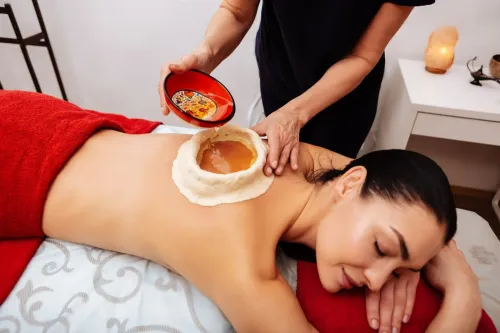
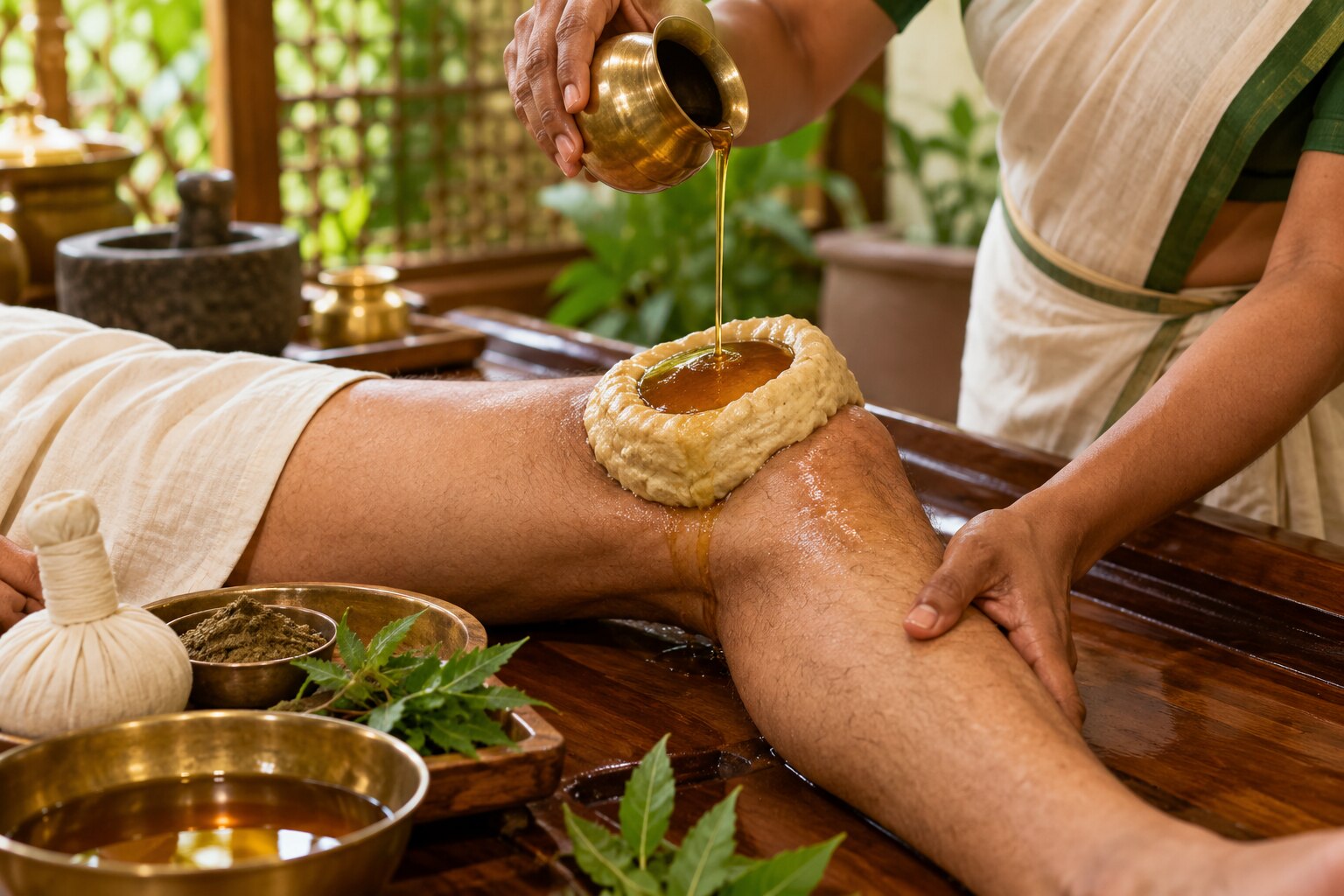
2. Why is Janu Basti for knee pain appropriate for me? Clarify its purpose, session frequency, skin or heat precautions, and whether it complements therapeutic exercise rather than replacing strengthening and aerobic activity.
3. Which exercises and yoga-based movements will I perform? Request exact repetitions, pain limits and progression. Massage or heat alone will not build the quadriceps strength needed for mobility.
4. What diet changes and Ayurvedic internal medicines are proposed? Ask for ingredient names, dose, duration, interactions and monitoring, especially if you take anticoagulants or medicines for diabetes, blood pressure, liver or kidney disease.
5. What does Panchakarma for knee pain involve? Ask for the named procedures, preparation, expected effort, risks, alternatives and stop criteria. Do not proceed without medical assessment for a hot, red, severely swollen or locked knee, fever, inability to bear weight or major trauma.
Marma Ayurved And Panchkarma Clinic could fit this decision if its clinician documents these answers and coordinates exercise or medical referral when the diagnosis remains uncertain.
Related service
Bone & Joint Disorders Ayurvedic Treatment Bone & Joint Disorders Ayurvedic Treatment Natural Bone & Joint Care at Marma Ayurveda and Panchakarma Clinic At Marma Ayurveda and Panchakarma Clinic, Dr. View service → |
How Do You Measure Whether Knee Mobility Is Improving?
Improvement means doing more with less pain: walking farther, climbing stairs, rising from a chair, bending the knee and reaching full extension. Record a 0–10 pain score, walking time, stair ability and knee swelling before treatment, then repeat them under similar conditions.
- Reassess after four to six weeks of consistent home exercise, or sooner if pain, swelling or function worsens. Visits may be weekly during an active plan and less frequent as you learn the routine; ask how long each session will last, since assessment, hands-on care and exercise instruction can require 30–60 minutes.
- Complete prescribed quadriceps strengthening and aerobic exercise on most agreed days. Add knee balance exercises near a counter, such as supported single-leg standing, and stop if the knee gives way or sharp pain replaces muscle effort.
- Track quadriceps function with chair stands, a controlled step-up and whether the knee fully straightens. Note walking distance, activity breaks, footwear changes and recovery time after exercise.
- Weigh yourself weekly under similar conditions. For people who are overweight, weight loss and knee osteoarthritis management work alongside exercise; even modest loss helps, while a 10% loss is more beneficial than 5% for many people.
- Treat Ayurvedic care, massage or heat as adjuncts, not substitutes for therapeutic exercise or medical care. A realistic knee pain treatment timeline is measured in functional gains over weeks, not proof that cartilage has been restored; reassess the plan if scores and activity do not improve.
Frequently asked questions
Which knee problems can affect mobility?
Knee osteoarthritis can cause gradual pain, stiffness after inactivity, reduced bending or straightening, and difficulty walking or using stairs. Overuse, muscle weakness, postsurgical pain, and stable ligament or meniscus injuries can also limit movement.
How can you check knee mobility before seeking assessment?
Note how far you can bend and straighten the knee, whether you limp, and how walking, stairs, sitting, or rising from a chair affect symptoms. A clinician can assess movement, strength, stability, swelling, and the need for further evaluation.
How are Ayurvedic therapies matched to knee symptoms?
An Ayurvedic practitioner should match treatment to your pain pattern, stiffness, swelling, strength, mobility limits, health history, and diagnosis. The plan may combine supervised therapies, exercises, activity changes, and home care rather than using one treatment for every knee problem.
What should you ask before starting an Ayurvedic knee-mobility plan?
Ask what problem the plan targets, which therapies will be used, how often sessions are needed, what improvement to expect, what risks apply, what home care is required, and when you should seek orthopedic or urgent medical assessment.
How do you measure whether knee mobility is improving?
Record knee bending and straightening, pain during activity, walking distance, stair ability, sitting-to-standing difficulty, swelling, and stiffness after rest. Repeat the same checks at regular intervals to compare progress.