
Pain that travels from the lower back through the buttock and down one leg can limit walking, sitting, sleep, and work, but “sciatica” describes a symptom rather than one confirmed diagnosis. You will learn how an Ayurvedic plan may support comfort and movement, which warning signs require medical care first, and how to judge whether a treatment plan is producing useful functional change.
Key takeaways
- Rule out urgent neurological symptoms before choosing conservative Ayurvedic care.
- Match treatment to pain severity, nerve symptoms, and mobility limits.
- Measure progress through walking tolerance, sleep, leg strength, and daily function.
- Coordinate Ayurveda with physiotherapy and medical care instead of stopping treatment alone.
What sciatica means and how an Ayurvedic assessment begins
Leg pain is suitable for conservative Ayurvedic care only after a practitioner checks that it is uncomplicated and that no urgent neurological problem is present.
Sciatica symptoms usually follow the sciatic nerve from the lower back through the buttock and down one leg, but similar pain can come from the hip, muscles, joints, or another medical condition.
Seek urgent medical assessment instead of massage, oil treatments, or cleansing procedures if you have:
- Pain or altered sensation in both legs
- Severe or worsening weakness or numbness in both legs
- Numbness around the genitals or anus
- New difficulty controlling urination or bowel movements
An Ayurvedic assessment for sciatica should begin with the likely cause and your neurological function, not with a fixed Panchakarma protocol.
The practitioner should ask where the pain travels, whether numbness or weakness is present, how far you can walk, what positions worsen it, how it affects sleep and work posture, and what imaging or treatment you have already received.
They should also check movement, strength, sensation, and walking pattern, then refer you for medical evaluation when findings require it.
Ayurveda may describe the presentation as Gridhrasi and use a Vata-based framework. That traditional label does not identify a disc herniation, spinal stenosis, or a specific nerve-root lesion. Routine MRI is not required for every uncomplicated case; imaging matters when serious disease is suspected or the result would change management.
Conservative care should support tolerable activity and exercise, not replace necessary neurological assessment.
How treatment choices change with pain, nerve symptoms, and mobility limits
Treatment should match the symptom pattern, not just the pain location. A short-term reduction after heat or massage can ease movement, but it does not prove that a compressed nerve or disc problem has been corrected.
| Pattern | Possible Ayurvedic focus | Why the plan differs |
|---|---|---|
| Acute, highly painful pain | Gentle Abhyanga, comfortable movement, and carefully selected Swedana; avoid forceful massage | Irritated tissues can worsen after aggressive pressure or stretching |
| Recurring episodes | Abhyanga, Kati Basti, therapeutic exercise, posture changes, and graded activity | Recurrence requires strength, movement capacity, and work-habit changes, not repeated passive relief alone |
| Numbness, tingling, or weakness | Neurological review, activity within tolerance, and referral when symptoms progress; do not begin cleansing procedures as a substitute for assessment | These signs can reflect nerve-root involvement, which oil treatments cannot decompress |
| Muscle-driven tightness or restricted hip movement | Abhyanga, Swedana, guided mobility, and local treatment such as Janu Basti when knee stiffness limits walking | Relaxing muscles and improving joint movement may restore function when nerve signs are absent |
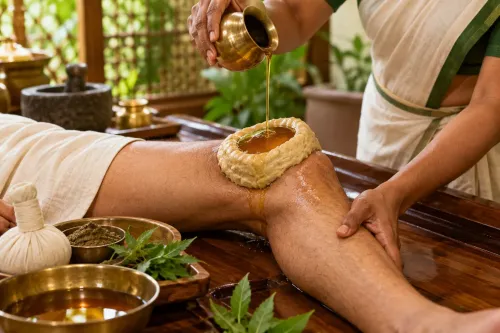
Kati Basti places warm oil over the lower back; Janu Basti targets the knee, not the sciatic nerve. Basti or other Panchakarma procedures require a qualified practitioner who has clarified the likely cause and checked medicines, bowel symptoms, and medical risks.
Keep walking and exercising within your limits rather than treating relaxation as recovery. Track walking time, sitting tolerance, sleep, leg symptoms, and weakness. New bladder or bowel trouble, saddle numbness, or worsening weakness in both legs needs urgent medical assessment, not massage or Swedana.
What treatment involves and how to measure meaningful progress
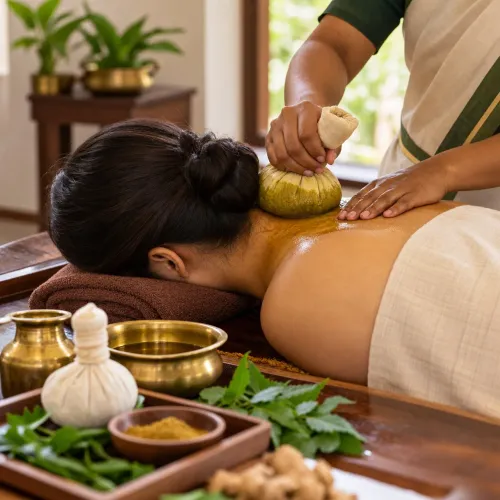
During Ayurvedic sciatica treatment sessions, expect a review of pain, numbness, strength, walking, sleep, and the previous appointment’s response before massage, Kati Basti, heat treatment, Basti, or another procedure is selected. Ask what each procedure is intended to change.
If Panchakarma is proposed, request the exact procedures, sequence, duration, and between-session restrictions; it is not one standardised treatment.
Between appointments, follow the movement plan rather than treating rest as the main therapy. Therapeutic exercise should match your symptoms and may include gentle spinal or hip movement, nerve-friendly mobility, and gradual strengthening. Continue normal activity as tolerated, and stop or seek review if weakness, numbness, or leg symptoms clearly worsen.
Measure function at the same time each day, using the same route and chair where possible.
| Measure | Meaningful improvement | Brief relaxation only |
|---|---|---|
| Walking tolerance | You walk longer or farther before leg pain limits you | Pain eases briefly but distance stays unchanged |
| Sitting tolerance | You sit through work, travel, or a meal with fewer position changes | You feel looser after treatment but cannot sit longer |
| Sleep disruption | Fewer awakenings or easier turning in bed | You sleep well only on treatment days |
| Leg-raising tolerance | Movement improves without increasing radiating symptoms | Flexibility feels better while nerve pain remains unchanged |
Record these results weekly, alongside a 0–10 pain score. Improvement means better daily function that lasts between sessions, not only calmness on the treatment table. If progress stalls after an agreed review period, ask for the plan to be modified.
Where Ayurveda fits with physiotherapy, medicines, injections, and surgery
Ayurvedic care can complement conventional treatment when pain is stable, leg strength is intact, and your plan includes movement. Use Abhyanga, Kati Basti, Swedana, or prescribed Ayurvedic medicines as supportive care alongside physiotherapy for sciatica, not as replacements for neurological assessment or rehabilitation. Evidence for these treatments in confirmed nerve-root sciatica remains limited.
Keep normal activity within tolerable limits and follow an exercise programme adapted to your symptoms. Passive treatment alone can provide temporary comfort without restoring walking, bending, or lifting capacity. A physiotherapist can adjust exercises when pain centralises, spreads farther down the leg, or exposes weakness.
Medical evaluation takes priority if you develop:
- New or worsening leg weakness, foot drop, or frequent falls
- Numbness around the genitals or inner thighs
- Trouble starting urination, loss of bladder or bowel control, or severe rapidly worsening pain
- Fever, unexplained weight loss, major trauma, or a history of cancer
A clinician can decide whether pain medication, an epidural injection, imaging, or sciatica surgery is appropriate. An MRI is not automatically needed for uncomplicated symptoms, but delaying assessment when neurological deficits appear can risk missed nerve damage.
Tell every clinician about Ayurvedic products, especially if you take anticoagulants, diabetes or blood-pressure medicines, sedatives, or liver-metabolised drugs. Choose complementary care that supports the medical plan and includes clear follow-up measures for strength, walking distance, sleep, and daily function.
How to choose a safe plan and avoid common sciatica mistakes
Before agreeing to treatment, ask who will assess you and what will trigger referral. Confirm a BAMS qualification, current professional registration, experience with radiating leg pain, and a written plan that distinguishes a traditional Gridhrasi assessment from a confirmed nerve-root cause.
Ask these questions before your first procedure:
- What symptoms require urgent medical review, such as new leg weakness, saddle numbness, or bowel and bladder changes?
- What exactly does “Panchakarma for sciatica” include, and why is each procedure suitable for me?
- What are the Basti safety checks, including infection control, constipation, pregnancy, bleeding risk, and medicines?
- What is each medicine’s full name, dose, manufacturer, batch number, expiry date, and heavy-metal testing record?
- How will you manage Ayurvedic medicine safety if I take painkillers, blood thinners, diabetes medicines, or supplements?
- Will you avoid forceful spinal manipulation, and will you explain spinal manipulation risks before any manual technique?
- When will you refer me to a physician, physiotherapist, or emergency service?
- What will you measure at follow-up: walking time, sleep, leg strength, numbness, and work tolerance?
| Plan feature | Safer answer | Warning sign |
|---|---|---|
| Qualified care | Named practitioner and registration details | Vague credentials |
| Panchakarma | Procedures, dose, duration, monitoring, and stop rules | “Detox” without specifics |
| Follow-up | A scheduled review with escalation criteria | No review after treatment |
Marma Ayurved And Panchkarma Clinic should be asked these same questions; clear answers matter more than a branded protocol.
Related service
Bone & Joint Disorders Ayurvedic Treatment Bone & Joint Disorders Ayurvedic Treatment Natural Bone & Joint Care at Marma Ayurveda and Panchakarma Clinic At Marma Ayurveda and Panchakarma Clinic, Dr. View service → |
Frequently asked questions
What does sciatica mean, and how does an Ayurvedic assessment begin?
Sciatica describes pain travelling along the sciatic nerve, often from the lower back through the buttock and leg. An Ayurvedic assessment begins by reviewing pain location, numbness, weakness, walking ability, bowel or bladder changes, and other warning signs before planning conservative care.
How do treatment choices change with pain, nerve symptoms, and mobility limits?
Treatment must reflect symptom severity and function. Mild pain without neurological deficits may suit a conservative plan, while progressive weakness, severe numbness, or major walking difficulty requires medical assessment before or alongside Ayurvedic treatment.
How can you measure meaningful progress during sciatica treatment?
Track walking distance, sitting and standing tolerance, sleep disruption, pain intensity, leg strength, numbness, and the activities you can complete. Improvement means better function, not only a lower pain score.
Where does Ayurveda fit with physiotherapy, medicines, injections, and surgery?
Ayurveda can form part of a coordinated conservative plan when urgent neurological problems are absent. Do not stop prescribed medicines, delay recommended imaging, or replace injections or surgery without discussing the decision with your treating clinician.
How can you choose a safe plan and avoid common sciatica mistakes?
Choose a qualified practitioner who screens for red flags, explains the treatment, coordinates with your medical team, and sets review points. Avoid forceful manipulation during acute symptoms, unverified remedies, prolonged bed rest, and ignoring worsening weakness or bladder and bowel changes.